Needle felting and wet felting both transform wool, but they do so in very different ways.
Understanding the difference can help you choose the right method for the project you want to create.
What Is Needle Felting?
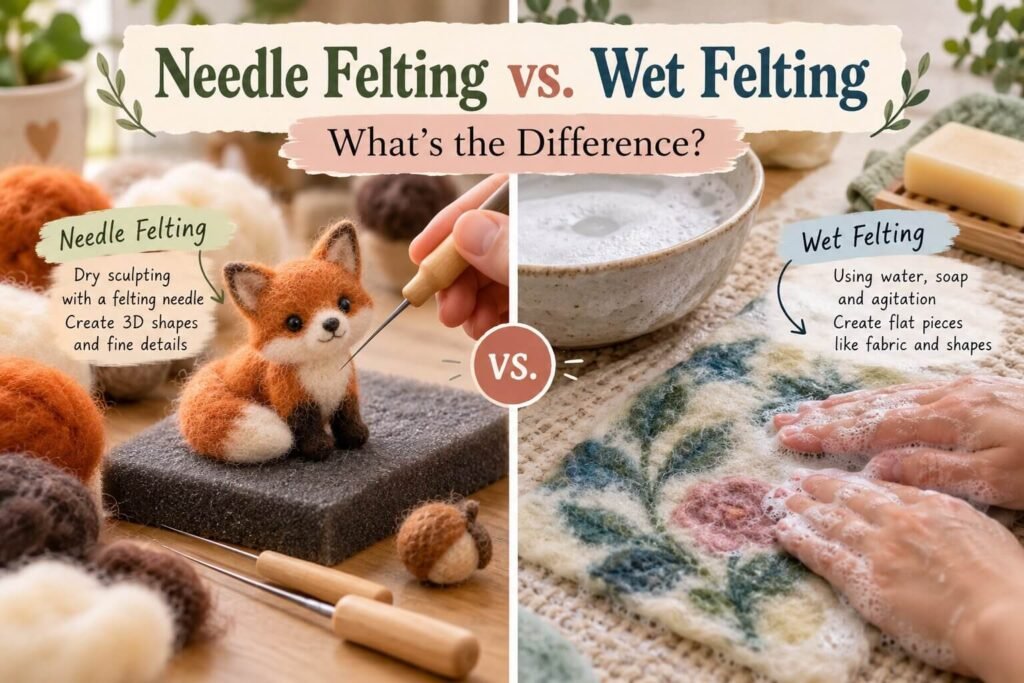
Needle felting is primarily a dry technique.
You use a specialized barbed needle to repeatedly work wool fibers.
As the fibers become tangled and compressed, they hold a shape.
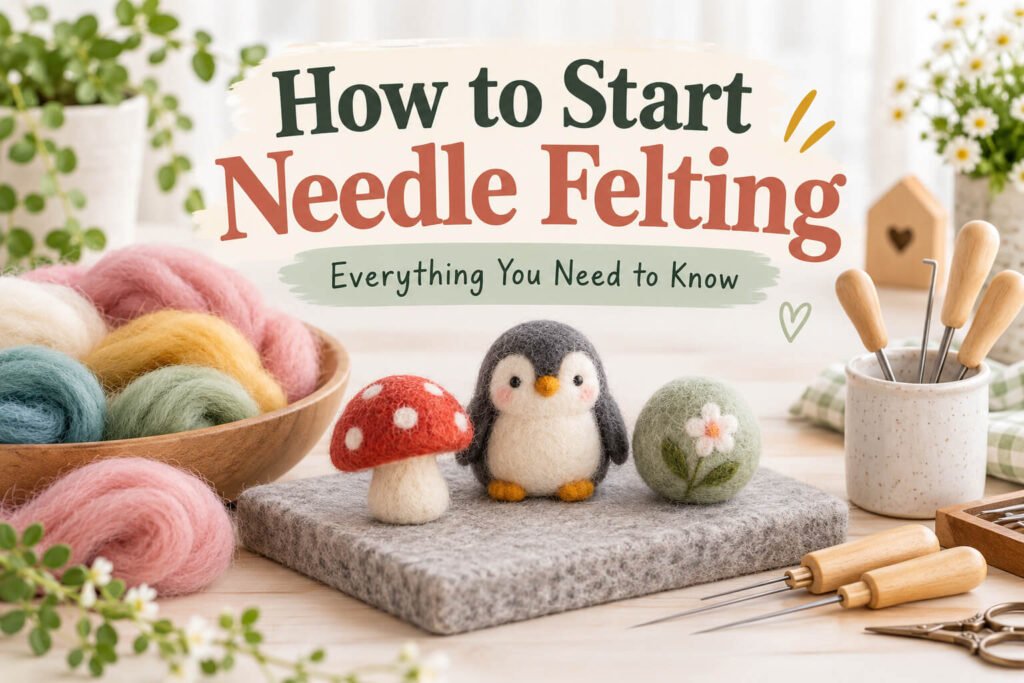
Needle felting is popular for small sculptures, animals, pet portraits, miniatures, ornaments, and wool pictures.
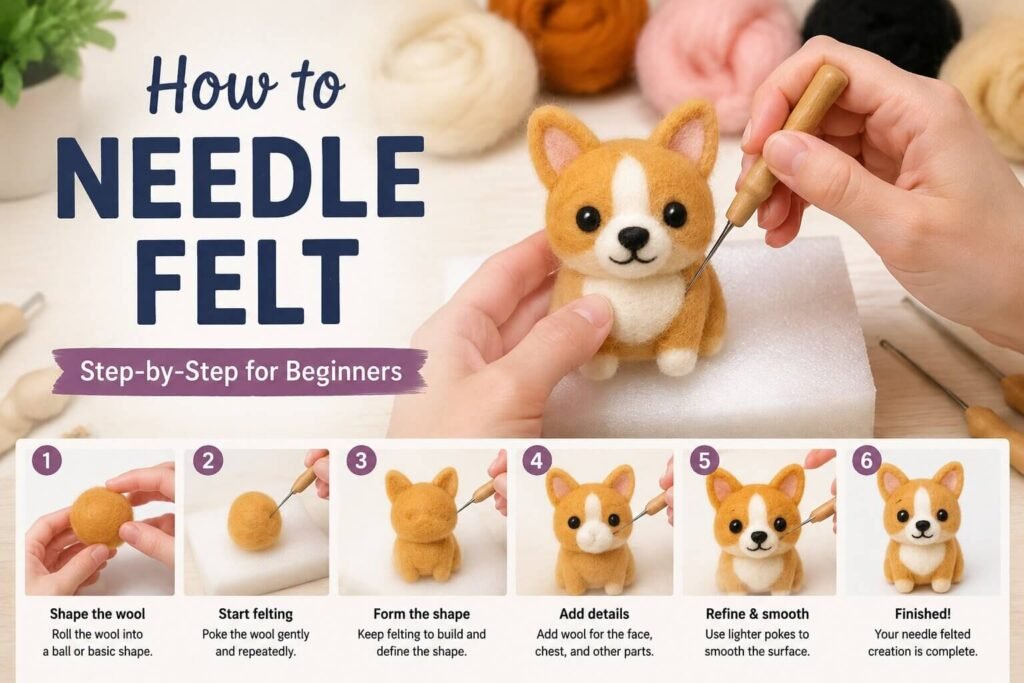
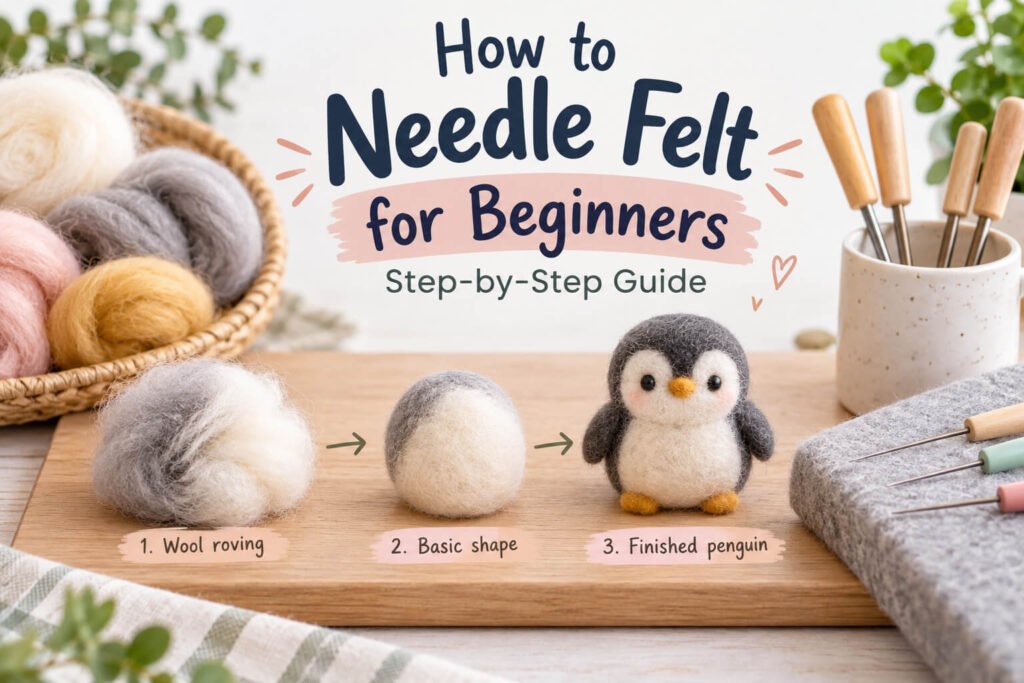
If this is the method you want to learn, follow our
step-by-step guide to needle felting for beginners.
What Is Wet Felting?
Wet felting typically uses water, soap, pressure, and agitation.
The fibers interact and gradually form a more unified felted material.
Wet felting is often used for larger flat pieces, bags, bowls, textiles, and wearable projects.
What Is the Biggest Difference?
Needle felting gives you precise local control.
You can concentrate on one small area.
Wet felting usually works a larger region of fiber at once.
This difference affects the types of projects each method is best suited for.
What Tools Do You Need for Needle Felting?
The basic supplies are wool, felting needles, and a protective mat.
Additional tools may include finger guards, needle holders, eyes, and wire.
What Tools Do You Need for Wet Felting?
Wet felting commonly uses wool, water, soap, and a suitable work surface.
Additional rolling, rubbing, or shaping tools may be used depending on the project.
Which Method Is Better for Making Animals?
Needle felting is generally better for detailed three-dimensional animals.
You can control small features such as ears, muzzles, paws, tails, and facial details.
If you want to make your first animal, start with one of these
easy animals to needle felt.
Which Method Is Better for Flat Felt?
Wet felting can be very effective for creating continuous pieces of felted material.
Needle felting can also create flat designs, but the approach is more like painting with wool.
Can You Combine Needle Felting and Wet Felting?
Yes.
Some fiber artists create a wet-felted base and then add needle-felted decorations.
There is no rule saying the techniques must remain completely separate.
Which Method Is Easier?
That depends on the project and the person.
Needle felting has a simple starting process.
Wet felting also has accessible beginner methods.
The better question is what you want to make.
How Does Needle Felting Work?
A barbed needle repeatedly moves wool fibers into one another.
If you would like the mechanics explained in more detail, read
how needle felting works.
Advantages of Needle Felting
Needle felting gives you precise control.
You can easily add material.
It works well for animals.
The workspace can be small.
No water is required.
Disadvantages of Needle Felting
The needles are sharp.
Large pieces can take a long time.
Needles can break.
Repeated hand movements can become tiring during long sessions.
Advantages of Wet Felting
Wet felting is useful for larger surfaces and textile forms.
It can create beautiful natural textures.
It also avoids the repeated use of a sharp felting needle during the primary felting process.
Disadvantages of Wet Felting
You need a workspace suitable for water.
Shrinkage requires planning.
Tiny sculptural adjustments are generally not as direct as they are with a needle.
Which Method Should Pet Artists Use?
If your main goal is to create a miniature cat, dog, rabbit, or other pet sculpture, needle felting is usually the more directly applicable method.
You can refine tiny areas and adjust proportions gradually.
Which Method Is Better for Beginners?
If you specifically want to compare the two from a first-time crafter’s perspective, read
dry felting vs. wet felting for beginners.
That article focuses more on setup, safety, control, and beginner-friendly projects.
Can You Learn Both?
Absolutely.
Learning multiple fiber techniques can help you understand how wool behaves.
The skills can also complement one another.
Which One Should You Start With?
Start with the technique most closely connected to what you want to create.
If your dream is to make animals and realistic pets, begin with needle felting.
If you are primarily interested in felt textiles, wet felting may be the better starting point.
Explore beginner needle felting supplies, wool, mats, kits, and project inspiration from
FeltMyPet and start with the method that matches your creative goals.