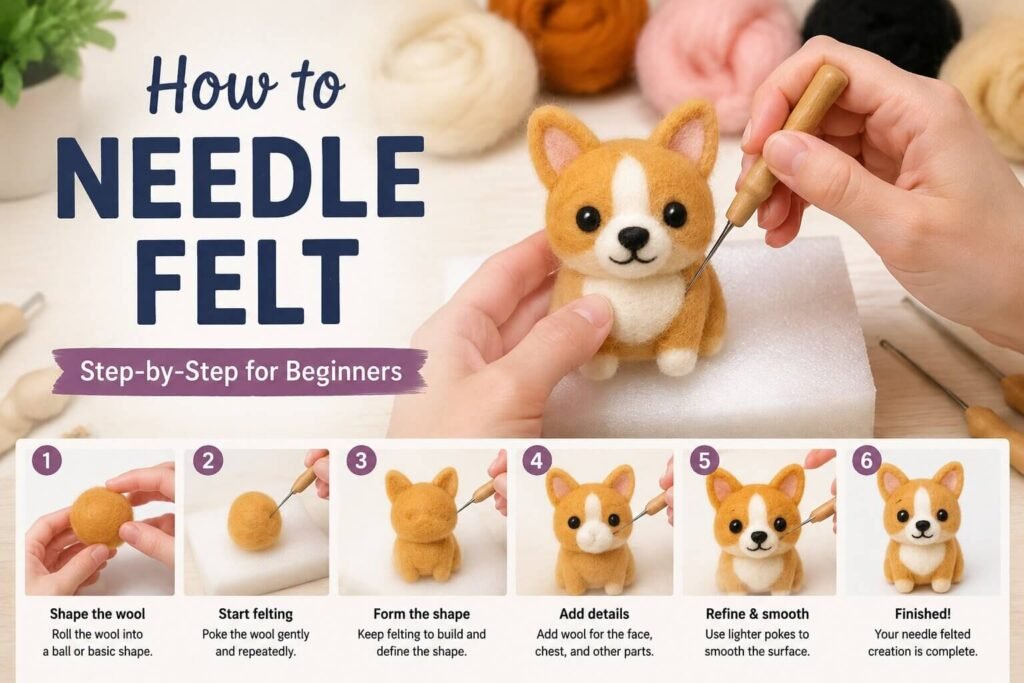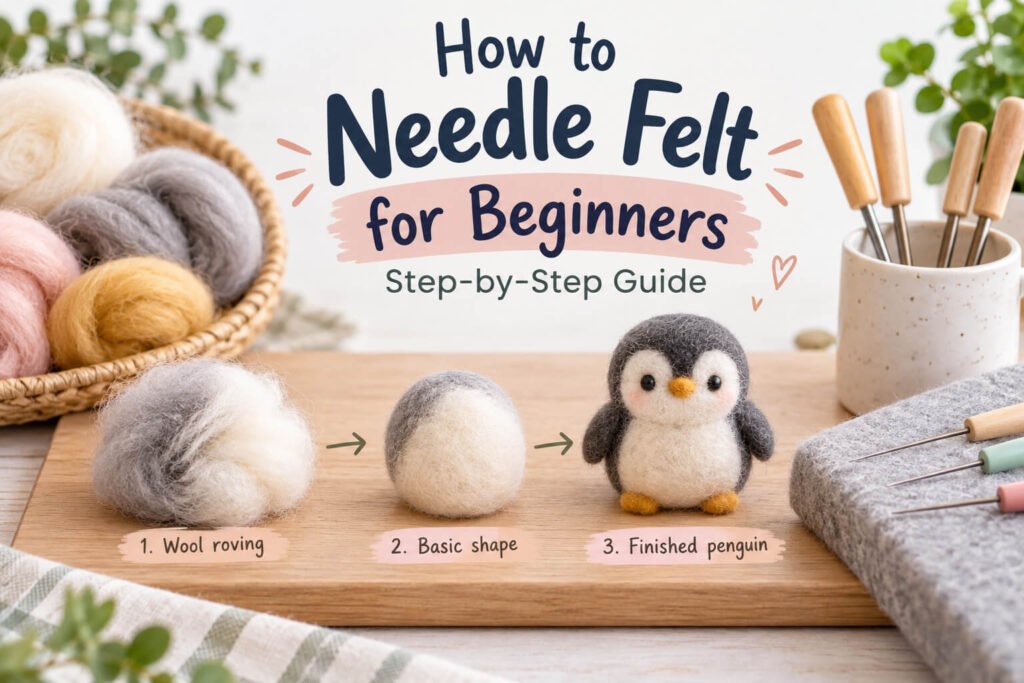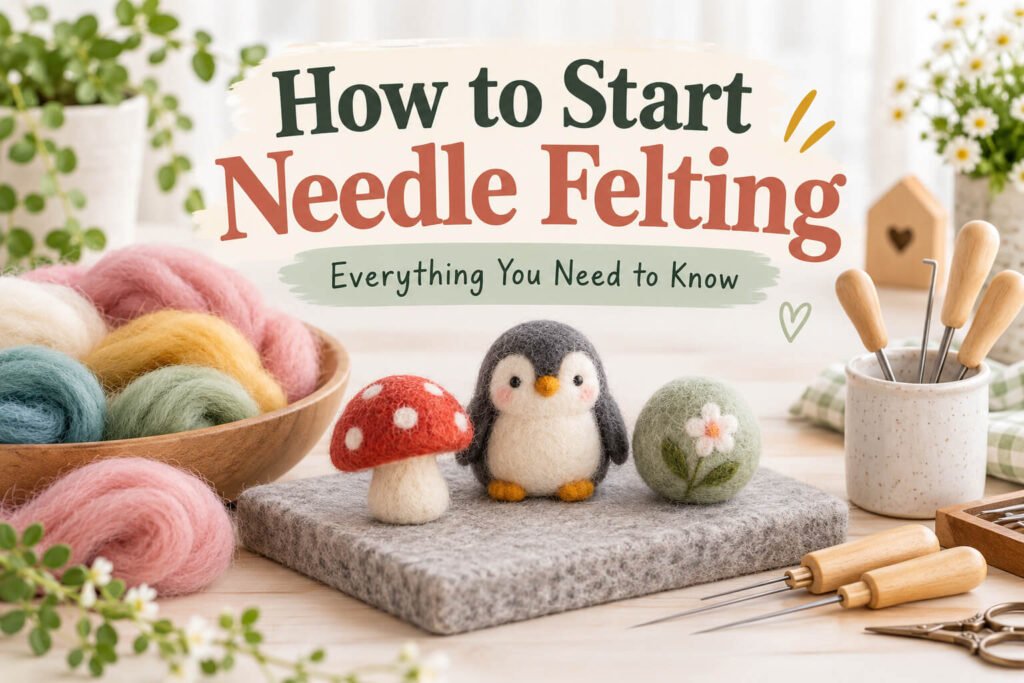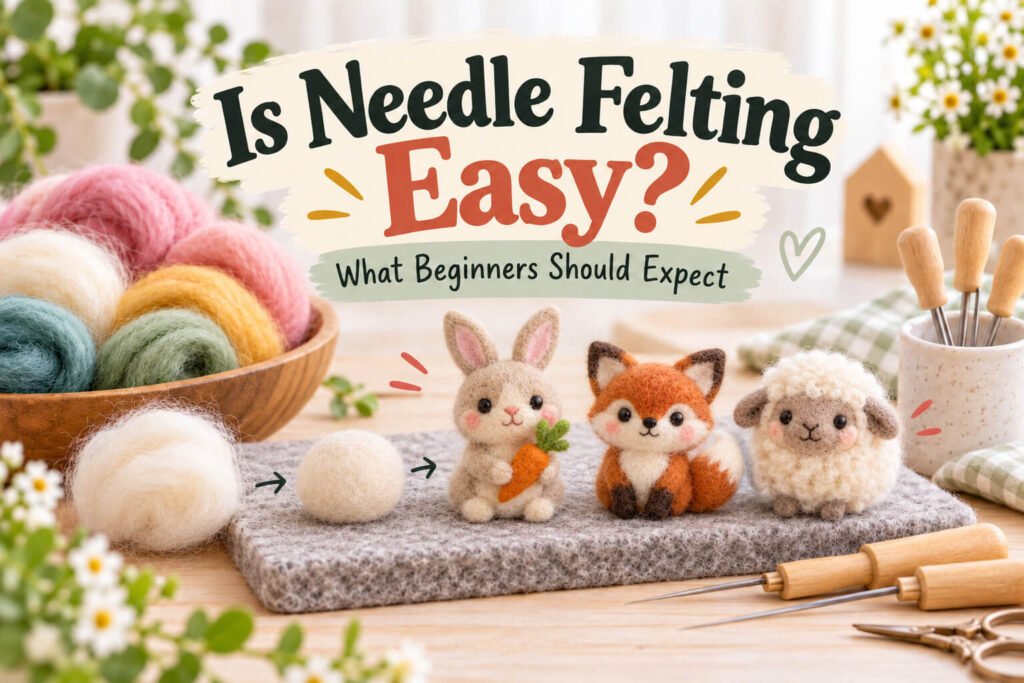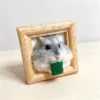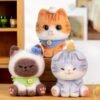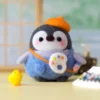
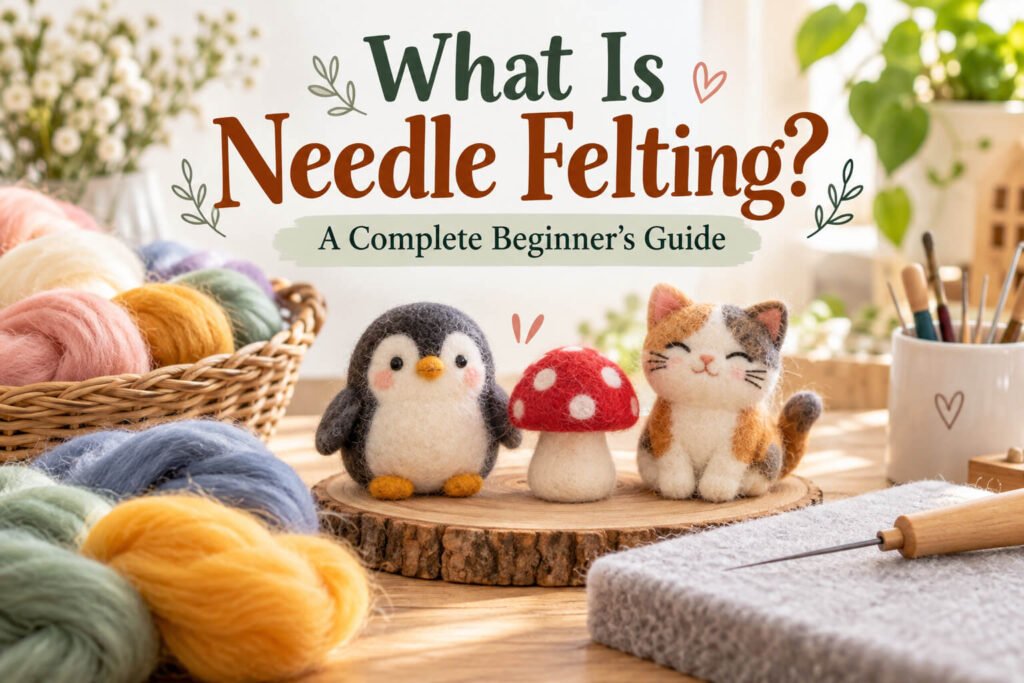
Needle felting is a creative fiber craft that turns loose wool into firm shapes, decorative pictures, miniature animals, ornaments, and even realistic pet sculptures. Unlike sewing or knitting, needle felting does not require thread, a sewing machine, or knitting needles. Instead, you repeatedly poke wool fibers with a special barbed felting needle until the fibers lock together.
For beginners, the process can seem almost magical. A soft handful of wool can slowly become a round ball, a tiny cat, a dog, a mushroom, or a detailed piece of fiber art.
If you have been wondering what needle felting is and whether it is a hobby you can learn at home, this guide covers the basics.
If you already understand the idea and want to begin creating, follow our step-by-step needle felting guide for beginners for a complete walkthrough of your first project.
What Is Needle Felting?
Needle felting is a dry felting technique that uses specially designed barbed needles to tangle wool fibers together.
The tiny barbs along a felting needle catch the fibers as the needle moves into the wool. Repeated poking gradually compresses and connects those fibers.
The more you work an area, the firmer it becomes.
This makes it possible to sculpt wool almost like clay.
You can create:
- Three-dimensional animals
- Miniature pets
- Dolls
- Christmas ornaments
- Wool paintings
- Flat decorative designs
- Keychains
- Brooches
- Seasonal decorations
- Realistic pet portraits
Needle felting is especially popular with people who enjoy handmade animals because wool can be layered, blended, shaped, and textured to imitate fur.
How Does Needle Felting Work?
The basic process is simple.
Start with loose wool and shape it roughly with your fingers. Place the wool on a felting mat. Then repeatedly insert a felting needle into the wool.
At first, the wool will feel loose and fluffy.
As you continue felting, it becomes smaller and denser.
You can add more wool whenever you need additional volume. You can also attach separate felted pieces by overlapping loose fibers and felting them together.
For example, when making a small cat, you might create the body first, then make a separate head, legs, ears, and tail.
The pieces can then be joined with additional wool.
If you are curious about why this happens, our guide to how needle felting works explains how barbed needles, fiber compression, and wool structure create a firm sculpture.
What Supplies Do You Need?
You do not need a huge collection of tools to begin.
Felting Needles
Felting needles are different from ordinary sewing needles.
They have small barbs that help move and tangle wool fibers.
Beginners often benefit from having several needle sizes because different needles work well for different stages of a project.
A medium or coarse needle can help with initial shaping, while a finer needle is useful for surface work and small details.
Always handle felting needles carefully because they are extremely sharp and can break if pushed sideways.
Wool
Wool is the main material used for traditional needle felting.
Many beginners use core wool for the interior of larger sculptures and colored wool for the visible surface.
Different types of wool behave differently. Some fibers felt quickly and produce a firm surface, while very fine wool may take longer to compact.
Felting Mat
A felting mat protects your table and gives the needle somewhere safe to travel after it passes through the wool.
Common choices include foam pads and wool felting mats.
A good mat should be thick enough to prevent your needle from hitting the table underneath.
If you are unsure which tools are really necessary, see our full guide to what you need for needle felting before buying your first supplies.
What Can Beginners Make?
One of the best things about needle felting is that you can begin with very simple projects.
Good first projects include:
- Wool balls
- Hearts
- Mushrooms
- Small birds
- Penguins
- Simple cats
- Simple dogs
- Pumpkins
- Snowmen
- Small ornaments
Starting with simple rounded shapes teaches you how wool behaves.
Once you understand how to control firmness, shape, and proportions, you can move on to more complicated animals.
For more inspiration, explore these easy needle felting projects for beginners.
Is Needle Felting Difficult?
The basic technique is easy to understand.
Creating highly realistic animals, however, takes more practice.
A beginner does not need to aim for perfection on the first project. Your first felted animal may look different from the picture you imagined, and that is completely normal.
Each project teaches important skills such as:
- Controlling density
- Creating symmetry
- Adding wool
- Attaching pieces
- Blending colors
- Smoothing surfaces
- Creating facial features
The craft becomes much easier once you understand how much wool to use and how firmly to felt each section.
Needle Felting vs. Wet Felting
Needle felting and wet felting both work with fibers, but they use different methods.
Needle felting is primarily a dry process.
Wet felting usually involves water, soap, pressure, and agitation.
Needle felting gives you excellent control over small areas, which is why it is so useful for detailed animals and sculptures.
Wet felting is commonly used for larger flat pieces, fabric-like materials, bags, hats, and other projects.
Some artists combine both techniques.
Is Needle Felting Good for Making Animals?
Yes. In fact, animals are among the most popular needle felting projects.
Wool is especially suitable for creating fur textures.
You can make stylized animals with simple shapes or spend more time creating realistic details.
A basic animal might use only a few wool colors.
A realistic pet portrait may involve several shades blended together to recreate markings, shadows, and natural fur variation.
If animals are your main interest, start with our list of easy animals to needle felt for beginners.
How Long Does Needle Felting Take?
There is no standard amount of time.
A small beginner ornament might be completed in one sitting, while a detailed realistic animal can take many hours or several sessions.
Your speed depends on:
- Project size
- Amount of detail
- Wool type
- Needle type
- Desired firmness
- Your experience level
Beginners usually work more slowly because they are learning how the fibers respond.
Speed naturally improves with practice.
Beginner Safety Tips
Needle felting is relaxing, but the needles are extremely sharp.
Always:
- Keep your fingers away from the needle path
- Poke straight into the wool
- Avoid bending the needle sideways
- Work on a proper felting mat
- Store needles safely
- Replace bent or damaged needles
- Supervise children closely
Finger protectors can also be useful while learning.
Why People Love Needle Felting
Needle felting requires relatively little equipment, does not require a large workspace, and gives you enormous creative freedom.
You can work for ten minutes or spend an entire afternoon on a project.
Many crafters also enjoy how forgiving wool can be. If part of your sculpture is too small, you can add wool. If one area is too large, additional shaping may help adjust it.
Most importantly, every handmade piece becomes unique.
Start Your First Needle Felting Project
You do not need advanced artistic skills to begin.
Start with wool, a few felting needles, a safe work surface, and a simple project that genuinely interests you.
Once you learn how to create basic shapes, you can gradually move toward animals, realistic pet portraits, ornaments, and more detailed wool sculptures.Explore beginner-friendly needle felting supplies and kits at FeltMyPet and start turning soft wool into something completely your own.