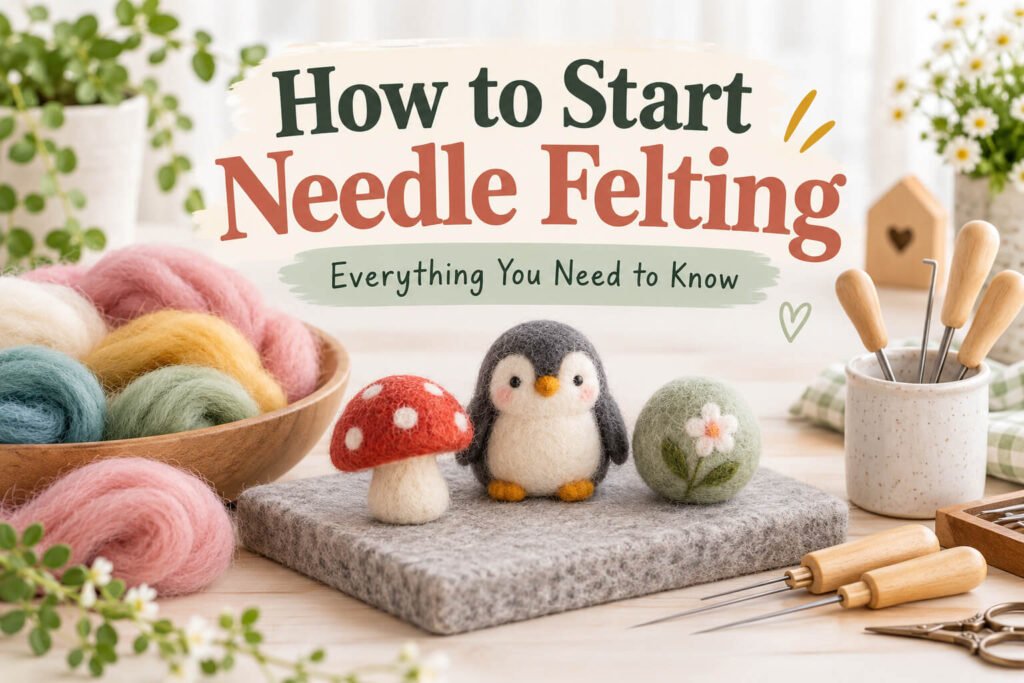
When you begin exploring wool crafts, you may come across the terms dry felting and wet felting.
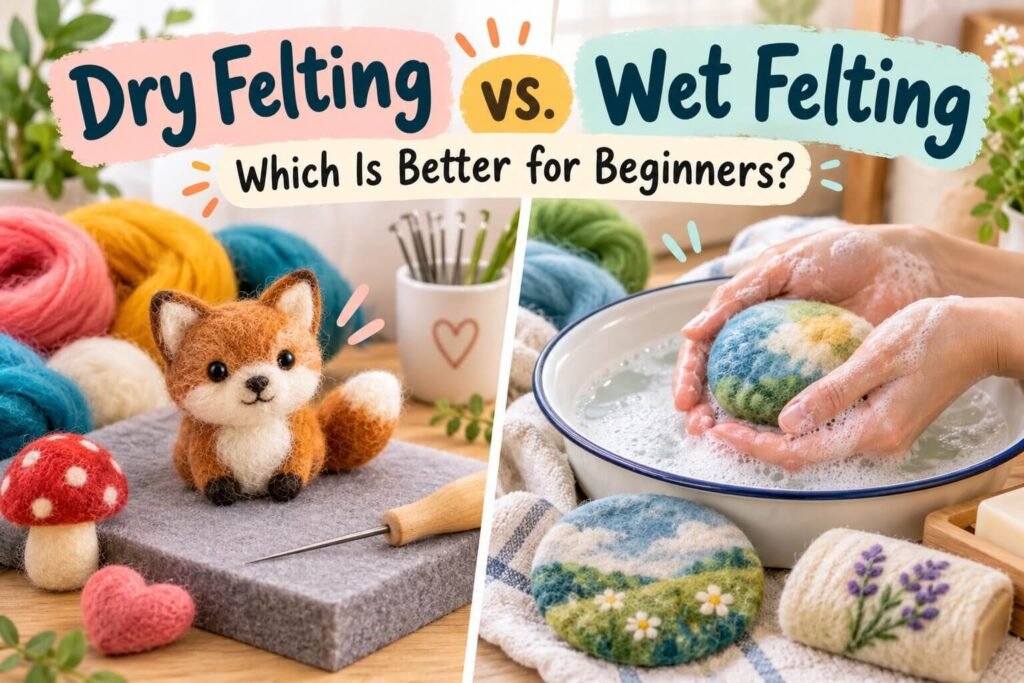
In many beginner craft discussions, dry felting refers to needle felting because the technique uses a barbed needle rather than water as the primary tool.
Wet felting uses moisture, soap, and agitation.
Both can be beginner-friendly, but they are suited to different goals.
What Is Dry Felting?
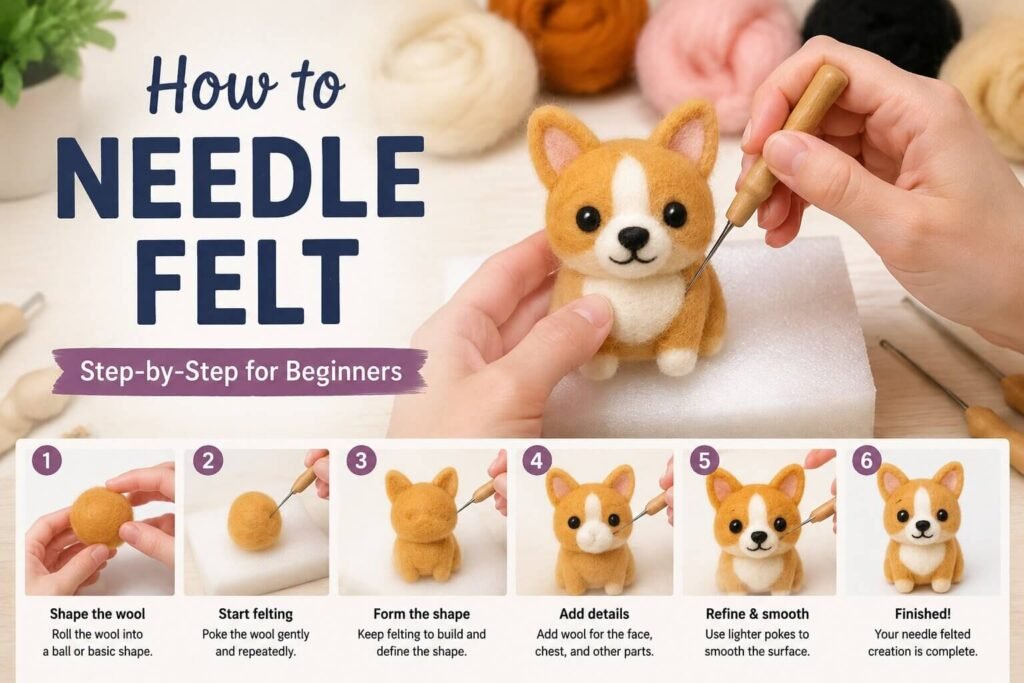
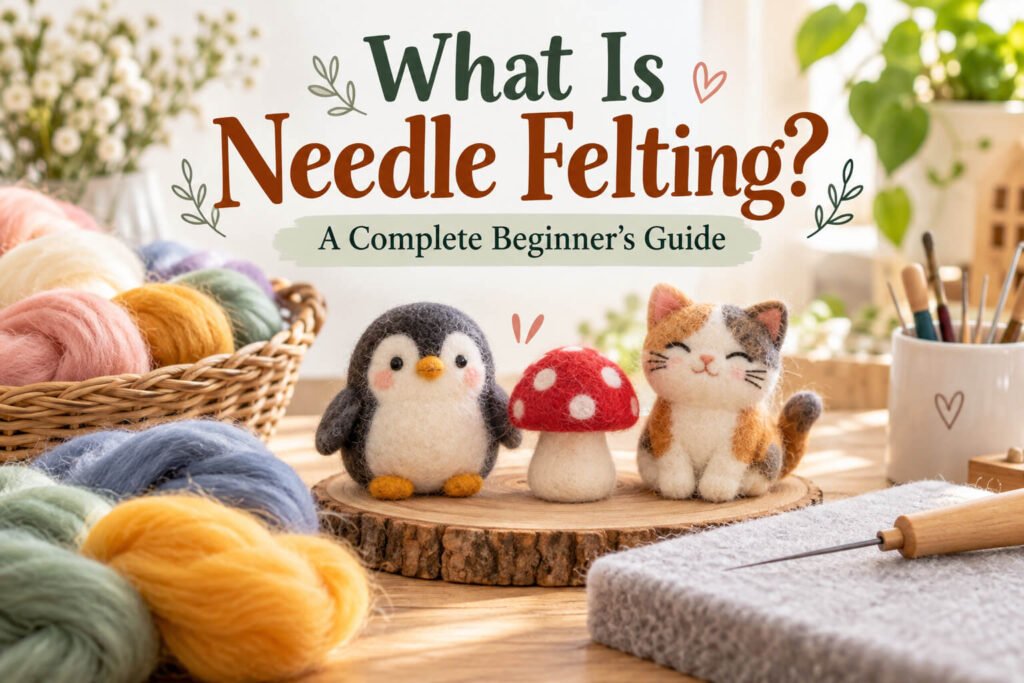
Dry needle felting uses a specialized barbed needle.
The needle repeatedly moves through loose wool until the fibers become sufficiently tangled and compressed to hold a shape.
It is commonly used for animals, dolls, ornaments, small sculptures, and wool pictures.
If you decide this is the method you want to learn, our
beginner needle felting tutorial walks you through the process.
What Is Wet Felting?
Wet felting uses water, soap, pressure, and agitation.
The fibers gradually lock together and form felt.
It is commonly used for flat textiles, bowls, bags, and some wearable projects.
Which Has the Easier Setup?
Needle felting can be started with wool, felting needles, and a mat.
The setup is compact and works well at a small desk.
Wet felting requires a workspace where water and soap can be used comfortably.
Neither setup is extremely complicated, but they feel very different.
Which Technique Gives Beginners More Precise Control?
Needle felting provides strong local control.
If one side of an animal’s face needs more wool, you can add material only to that area.
If a cheek is too large, you can felt it more firmly.
This makes dry needle felting intuitive for small sculptures.
Which Is Better for Animals?
Needle felting is particularly useful for animals.
You can create ears, noses, muzzles, paws, eyes, fur markings, and tails individually.
For pet lovers, this is a major advantage.
Which Is Better for Large Flat Projects?
Wet felting may be more practical when your goal is a large continuous textile.
Creating a large dense sheet entirely with a single needle could be extremely time-consuming.
Which Is Better for Wool Pictures?
Needle felting works very well for flat pictures.
Colored fiber can be placed exactly where you want it, almost like painting.
Which Method Is Safer?
Needle felting involves very sharp needles.
Beginners must develop good hand placement and always use a protective surface.
Wet felting avoids those sharp needles during its primary process but uses water and can create slippery work areas.
Neither method should be treated carelessly.
Which Method Costs Less to Start?
Both can be relatively affordable.
A small needle felting setup is compact and usually requires only a few tools.
Your actual cost depends on the quality and quantity of supplies.
Which Method Is Less Messy?
Needle felting does not involve soapy water.
You still have loose wool fibers to manage, but cleanup is usually dry.
Wet felting naturally requires a water-friendly workspace.
Which Is Easier to Take With You?
Needle felting supplies fit easily into a small box.
Always transport sharp needles securely.
Which Is Faster?
That depends on the project.
Needle felting is effective for small, detailed work.
Wet felting can be more efficient for larger surfaces.
Which Is Better for Learning Sculpture?
Needle felting teaches you how to control volume, proportion, symmetry, and shape.
This makes it especially useful if you eventually want to create realistic animals.
Want a Broader Comparison?
If you want more detail about tools, uses, and advantages rather than only beginner suitability, read
needle felting vs. wet felting.
Why Does Needle Felting Work?
The barbs interact with the wool fibers as the needle moves through them.
Our guide to
how needle felting works explains the process more fully.
Can Beginners Learn Both Methods?
Yes.
There is no need to choose one forever.
You may begin with needle felting and later experiment with wet felting.
What Should a Beginner Needle Felt First?
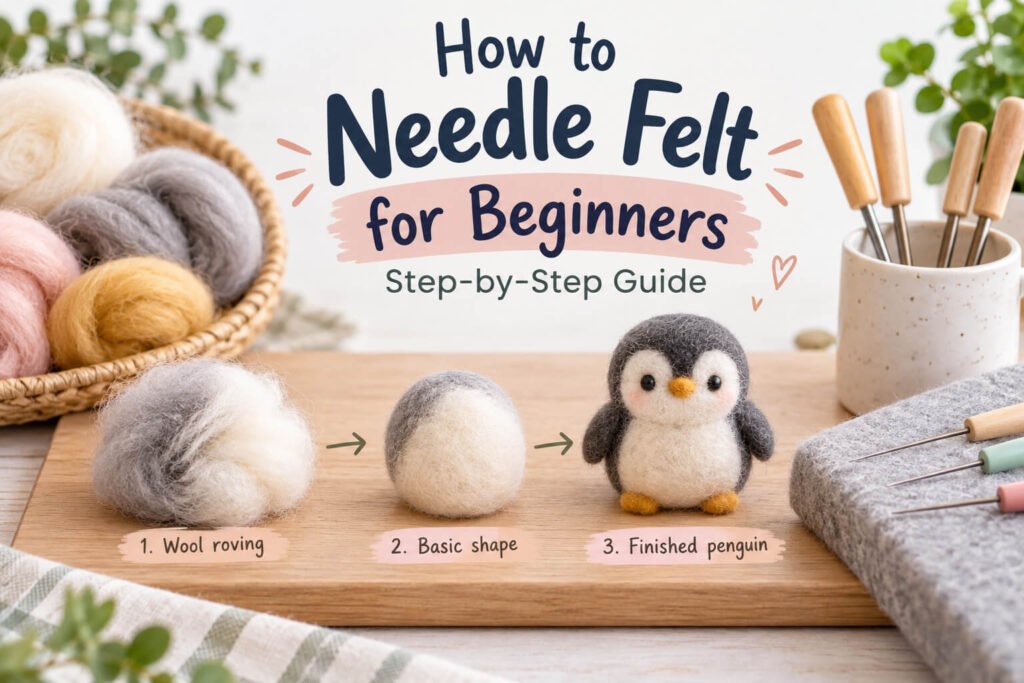
Choose something simple, such as a mushroom, heart, penguin, or owl.
Our
easy needle felting projects are good starting points.
Which Method Should Animal Lovers Choose?
If your goal is to make cats, dogs, rabbits, or miniature wildlife, needle felting is the more natural starting point.
You can always explore wet felting later.
Find beginner wool, needles, mats, kits, and animal-project materials from
FeltMyPet and start learning at a pace that feels comfortable.