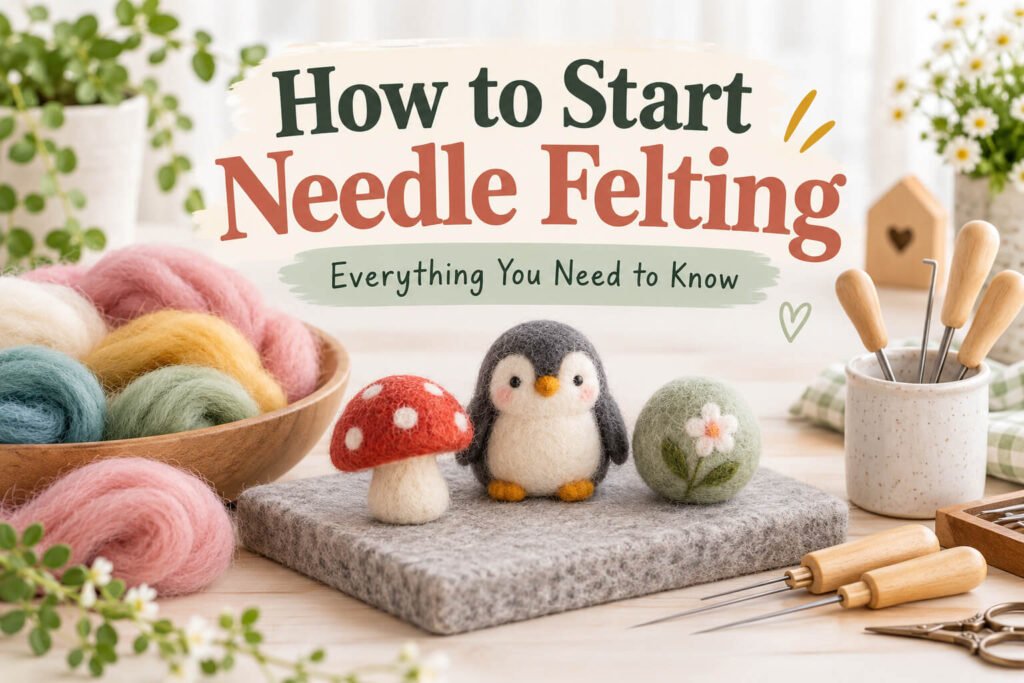
You do not need to attend an expensive workshop to learn needle felting.
With basic supplies, a safe work area, and a logical practice plan, you can develop strong needle felting skills at home.
Your main beginner reference can be our
complete guide to how to needle felt for beginners.
Step 1: Create a Small Workspace
You do not need a craft studio.
A table with good lighting is enough.
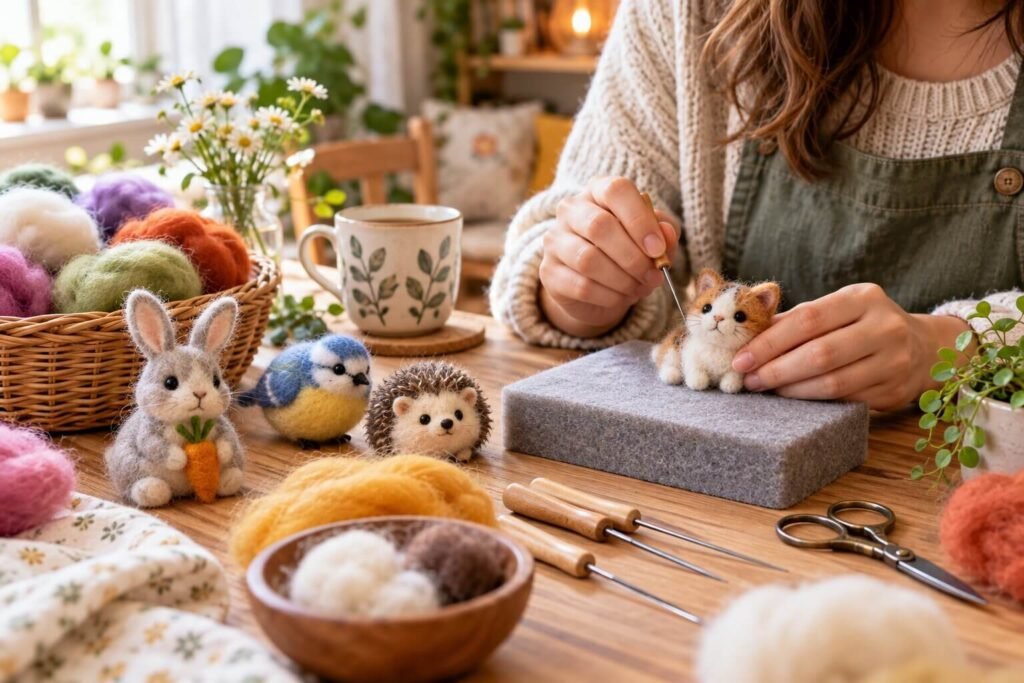
Keep your wool, needles, mat, and reference materials together.
Make sure sharp tools are safely stored when you are not working.
Step 2: Gather the Basic Supplies
Start with wool, felting needles, and a protective mat.
You may also want finger guards.
If you are unsure what is essential, read
what you need to start needle felting.
Step 3: Learn Needle Safety Before Anything Else
Practice inserting the needle straight into the wool and pulling it back out in the same general direction.
Avoid sideways pressure.
Always keep your fingers away from the needle path.
Safe technique should become automatic.
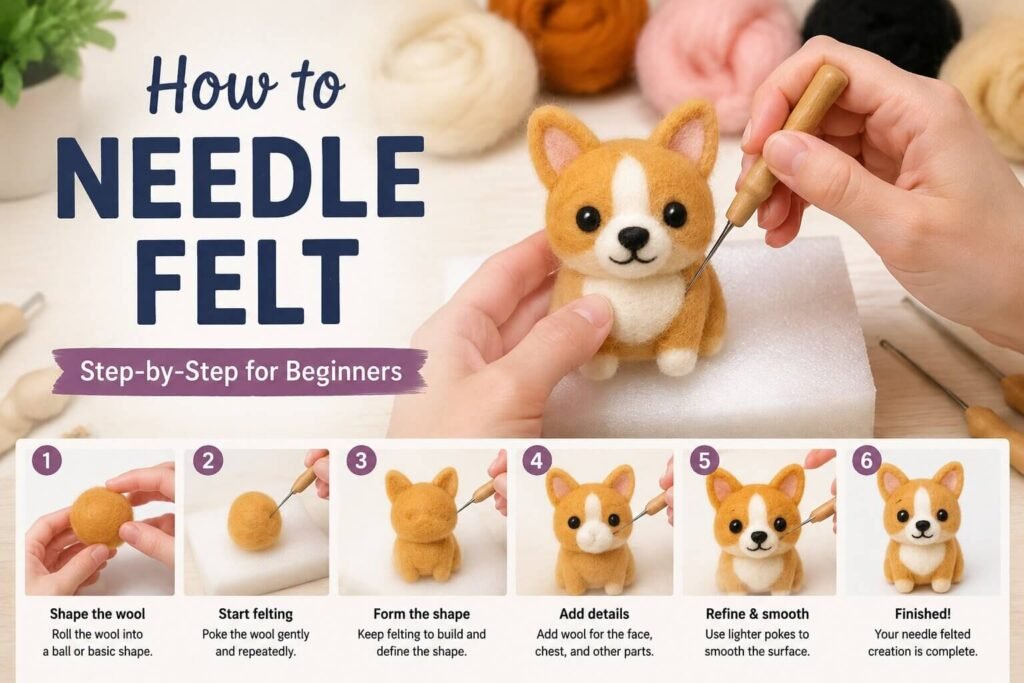
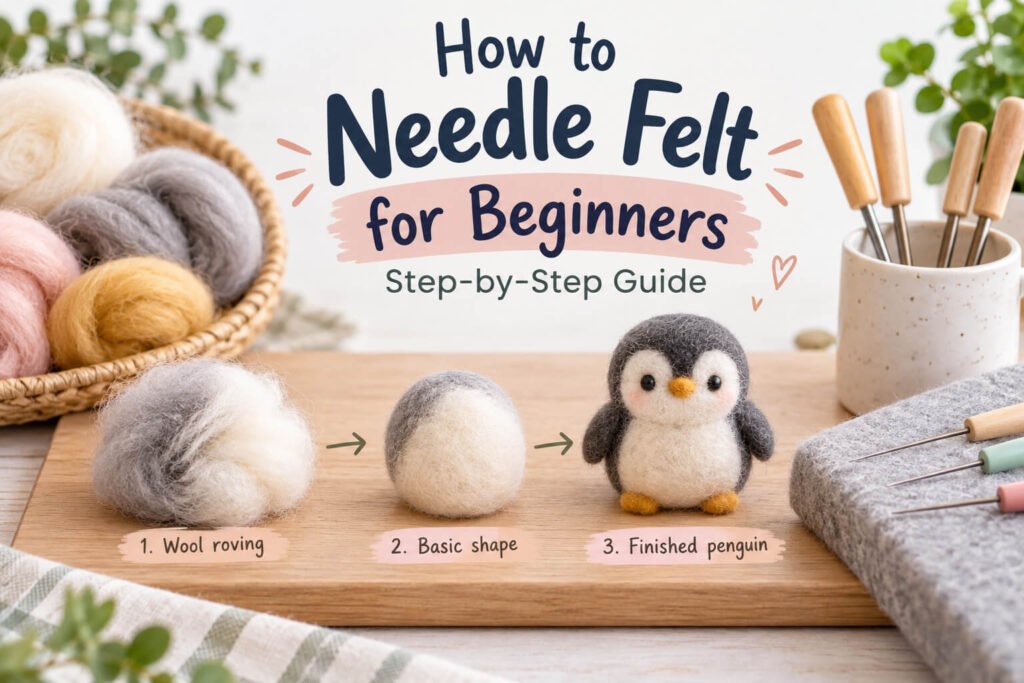
Step 4: Practice Making a Ball
Take a small amount of wool.
Roll it loosely.
Begin felting from all sides.
Rotate constantly.
Continue until the ball is reasonably firm and even.
This simple exercise teaches you how loose fiber changes during felting.
Step 5: Make Other Basic Shapes
Practice an oval, cylinder, cone, and flat shape.
These forms will later become animal bodies, heads, legs, noses, ears, and other features.
Step 6: Practice Attaching Two Pieces
Create two small shapes.
Leave some loose fibers on one attachment point.
Use those fibers to join the pieces.
Add a small layer of wool over the joint if needed.
Step 7: Complete a Simple Project
Now turn your practice into something recognizable.
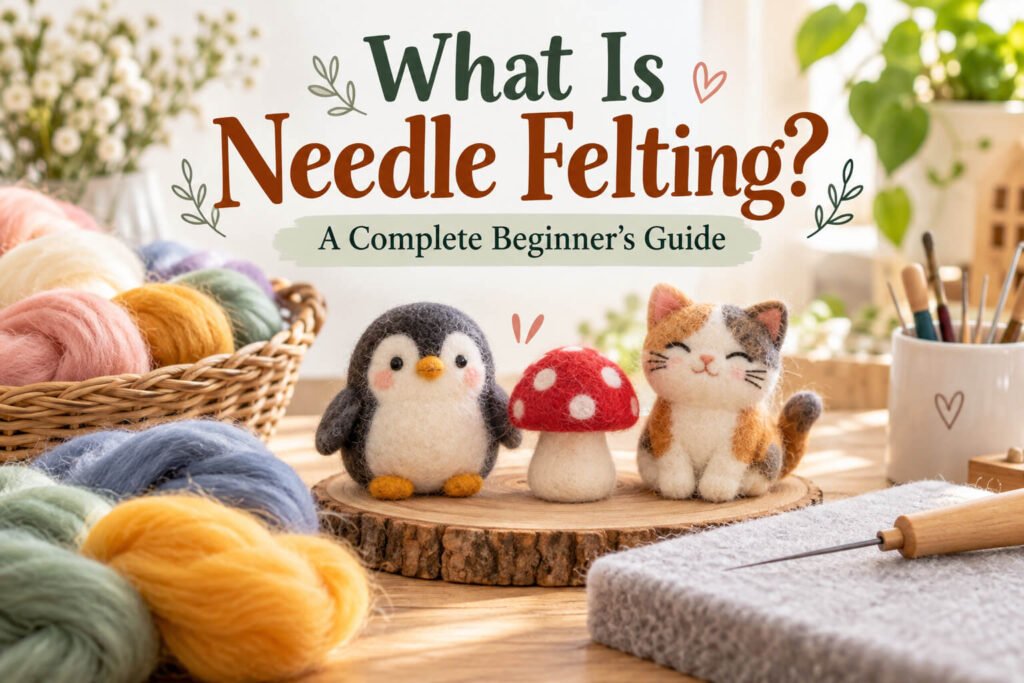
Try a mushroom, snowman, penguin, owl, or chick.
If you are unsure which one is best, read our guide to
choosing your first needle felting project.
Step 8: Practice Surface Color
Create a plain core.
Then apply a thin layer of colored wool.
Practice adding simple spots, stripes, bellies, or ear colors.
This is the foundation of animal markings.
Step 9: Make Your First Animal
Once you are comfortable with shapes and attachments, try a bunny, bear, mouse, cat, or puppy.
Keep the design stylized.
Realism can come later.
Step 10: Study Proportion
Use reference photos.
Compare the head with the body.
Look at ear size, leg length, eye position, and tail placement.
Observation is one of the fastest ways to improve animal sculptures.
Step 11: Practice Surface Finishing
After your main shape is correct, work on smoothing.
Use lighter, shallower needle movements.
A finer needle may help refine small areas.
A Four-Week Beginner Needle Felting Plan
During week one, practice shapes and safety.
During week two, complete several simple projects.
During week three, make one or two beginner animals.
During week four, focus on facial details, paws, ears, and color blending.
You can move faster or slower depending on your schedule.
How Should You Use Video Tutorials?
Do not simply watch an entire tutorial and expect to remember it.
Pause after each major step.
Complete that part of your project before continuing.
Pay attention to hand position, wool quantity, needle depth, and how often the artist rotates the piece.
Use Written Tutorials Too
Written instructions are convenient because you can keep them beside your workspace and reread a specific step.
Combining written and video instruction can work very well.
Can Beginner Kits Help?
Yes.
A kit removes the need to select every individual color and accessory.
This allows you to focus more on technique.
Keep a Practice Box
Not every exercise needs to become a finished animal.
Save practice ears, test balls, color blends, eyes, paws, and other small experiments.
They can help you compare techniques later.
Photograph Your Progress
Take photos from the front, side, and back.
Pictures often reveal proportion issues you do not notice while holding the sculpture.
They also give you a record of your improvement.
Expect Mistakes
You may break a needle.
You may make one ear larger than the other.
You may create a soft body or oversized nose.
These things happen.
Keep our guide to
common needle felting mistakes nearby while practicing.
Join Needle Felting Communities
Online craft groups can provide inspiration and feedback.
You can see different styles and learn how other artists approach similar problems.
Remember that not every artist uses the same methods.
Do You Need Expensive Courses?
Not necessarily.
Start with beginner resources.
Once you know which area interests you most, you can decide whether specialized instruction would help.
You might eventually want to study realistic cats, dog portraits, wildlife, wool painting, or armature sculpture.
When Should You Try a Realistic Pet?
Wait until you are comfortable creating basic shapes, attaching pieces, controlling firmness, matching proportions, and applying color.
Then start with a simplified version of a pet before attempting extreme realism.
Move Into Easy Animal Projects
As your confidence grows, try our
easy animals to needle felt for beginners.
Each new animal can introduce another skill.
Practice Regularly, Not Perfectly
You do not need to needle felt every day.
One small project each week can create noticeable improvement over time.
Consistency is more valuable than forcing yourself through long sessions you do not enjoy.
Start Learning With FeltMyPet
Teaching yourself needle felting at home is completely achievable.
Begin with safety and simple shapes, then gradually move into animals, detailed features, realistic fur, and pet portraits.
Explore beginner needle felting kits, wool, tools, needles, mats, and animal-project supplies from
FeltMyPet and build your skills one handmade project at a time.