Every needle felter makes mistakes.
The good news is that most beginner problems are predictable, and many can be corrected without restarting the entire project.
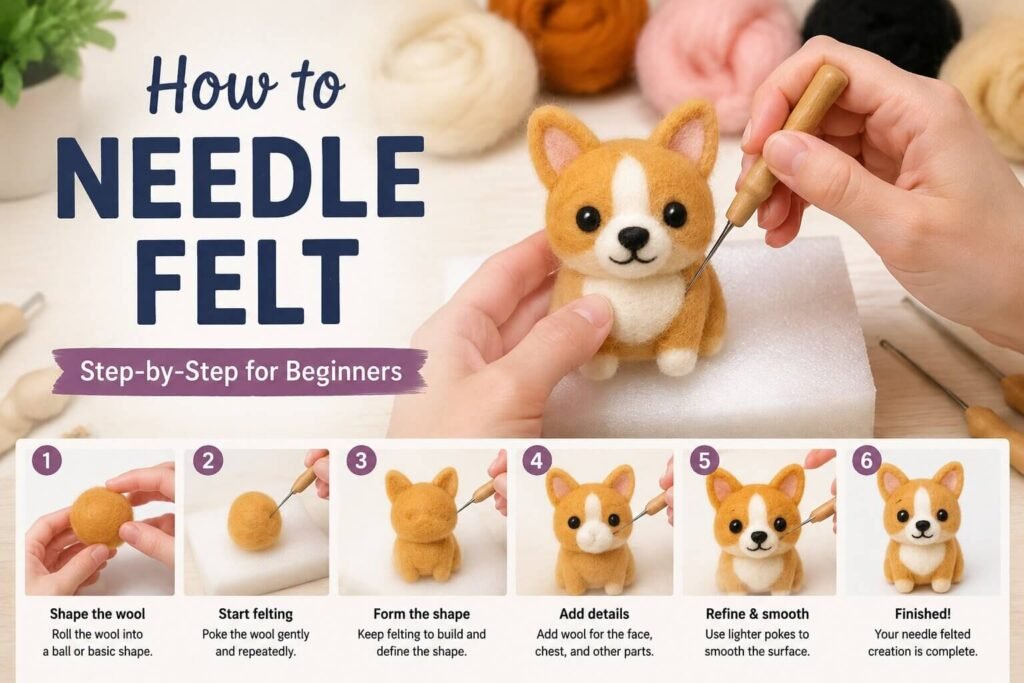
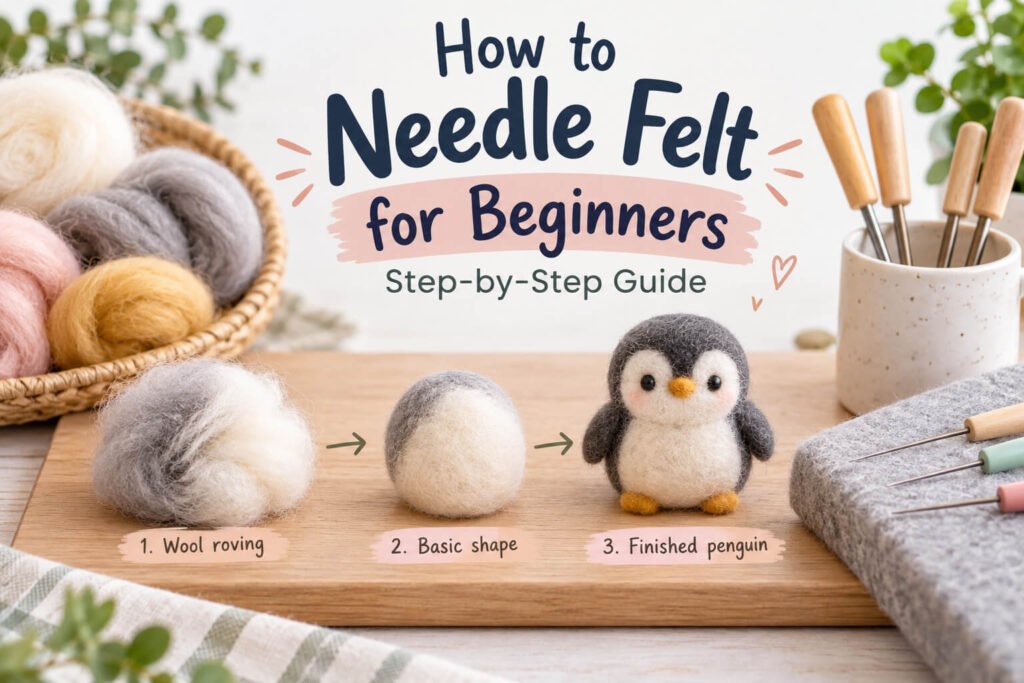
If you are still learning the basic technique, review our
step-by-step beginner needle felting guide before troubleshooting individual problems.
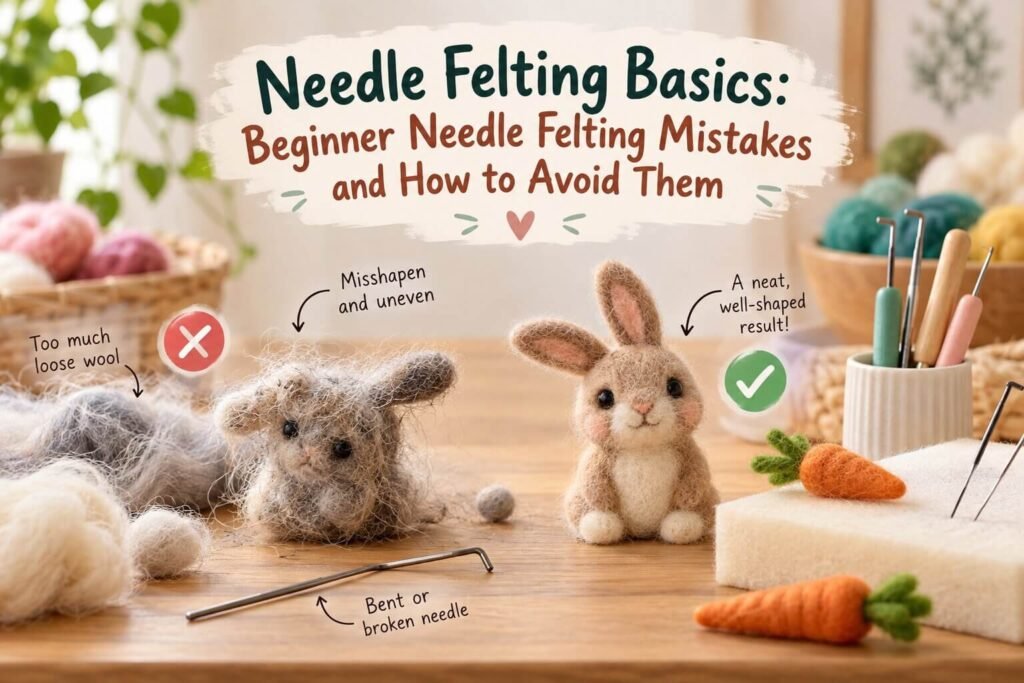
Mistake 1: Starting With Too Much Wool
A huge bundle of loose wool can be difficult to control.
Start with less material.
Build volume gradually.
Mistake 2: Leaving the Core Too Soft
A project can look finished on the outside while remaining unstable inside.
Build a firm foundation before adding the decorative surface.
Mistake 3: Breaking Felting Needles
This often happens when the needle is bent sideways while inside the wool.
Insert and withdraw along the same path.
Rotate the project instead of forcing the needle.
Mistake 4: Stabbing Your Fingers
Felting needles are extremely sharp.
Always work on a protective mat and keep supporting fingers away from the needle path.
Finger guards can help while you are learning.
Mistake 5: Felting From Only One Direction
If you work the same surface constantly, the sculpture may become flattened.
Rotate it regularly.
Mistake 6: Making One Ear Completely Before the Other
The second ear often ends up noticeably different.
Make paired pieces together.
Work a little on one and then a little on the other.
Mistake 7: Fully Felting the Attachment Point
A completely firm ear or leg can be difficult to attach.
Leave some loose fibers where the piece will connect.
Mistake 8: Using Too Much Wool for Facial Details
A small amount of fiber can create a large feature once compressed.
Use tiny wisps for noses, cheeks, eyelids, and eyebrows.
Mistake 9: Adding Details Too Early
Do not create beautiful eyes before checking whether the head is the correct size.
Finish the main form first.
Mistake 10: Using the Same Needle for Everything
A fine finishing needle may be inefficient for building a large loose core.
Learn when a different needle can make the stage easier.
Mistake 11: Smoothing the Surface Too Soon
Do not spend an hour refining a body you may still need to reshape.
Use a logical order:
Core
Proportion
Attachments
Surface color
Details
Final finish
Mistake 12: Ignoring Reference Photos
Human memory is not always accurate.
Keep reference images visible.
Compare ear size, eye spacing, body shape, and markings.
Mistake 13: Choosing an Advanced First Project
A highly realistic horse or long-haired dog can be frustrating for someone who has never made a wool ball.
Start with simple forms.
Mistake 14: Working in Poor Lighting
Dark wool and sharp needles are difficult to work with in dim light.
Good lighting improves both safety and accuracy.
Mistake 15: Comparing Yourself With Professional Artists
You usually see their finished work, not every practice piece and unsuccessful attempt.
Compare your current work with your own older work instead.
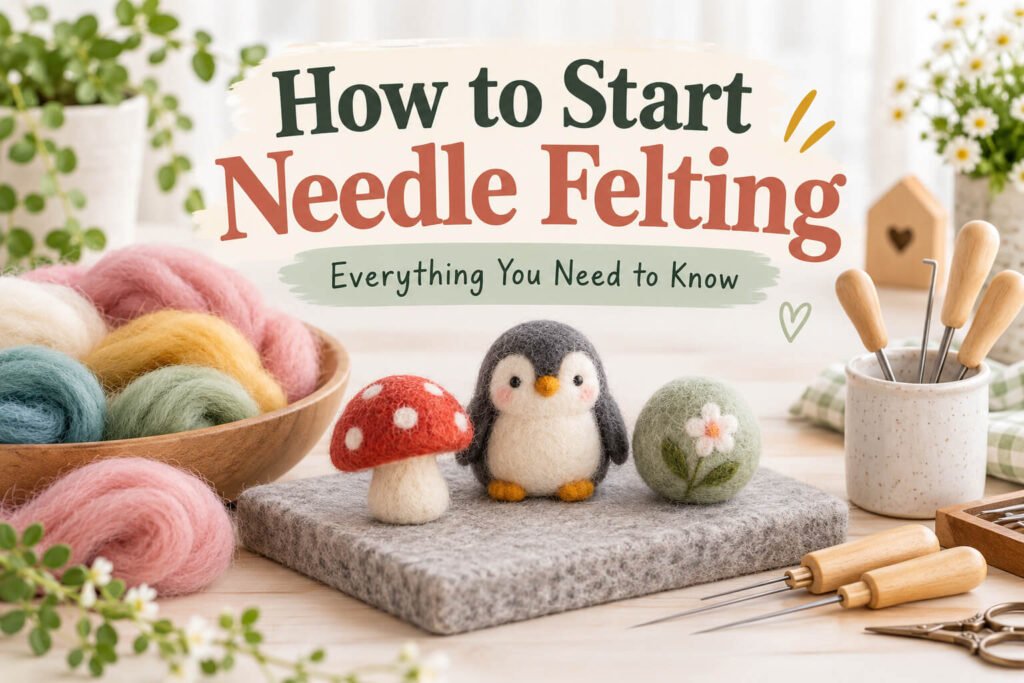
Review the Needle Felting Basics
Many mistakes happen because beginners have not yet developed a feel for proper firmness and wool control.
Our guide to
needle felting basics covers the core habits worth learning first.
How Do You Fix a Soft Project?
Continue working the wool evenly.
Rotate the piece and concentrate on areas that collapse easily.
Do not simply overwork the surface while leaving the center loose.
How Do You Fix an Uneven Shape?
Determine which area is too large or too small.
Work an oversized area more firmly.
Add small amounts of wool to an undersized area.
Make changes gradually.
How Do You Fix a Rough Joint?
Place a thin layer of matching wool across the connection.
Felt the fibers into both pieces.
This can strengthen and visually soften the joint.
How Do You Fix an Oversized Nose?
If it is not extremely dense, work it more firmly.
You may also be able to adjust the surrounding muzzle to improve the overall proportions.
How Do You Fix a Fuzzy Surface?
Wait until the overall sculpture is complete.
Then use controlled shallow needle work to refine the surface.
A finer needle can be useful.
Can Every Mistake Be Fixed?
Not perfectly.
However, many mistakes can become design decisions.
An oversized ear can make a cute stylized animal.
An unexpected color variation can become an intentional marking.
Do Mistakes Mean Needle Felting Is Too Hard?
No.
If early problems make the craft feel difficult, read
is needle felting hard to learn? for realistic expectations.
Practice Is the Best Fix
The more you work with wool, the easier it becomes to recognize firmness, shape, and proportion.
If you want a structured practice routine, see
how to learn needle felting at home.
Keep Felting
The goal is not to eliminate every mistake.
The goal is to recognize problems earlier and know how to respond.
Explore beginner kits, wool, needles, mats, and practice projects from
FeltMyPet and keep building your skills one project at a time.