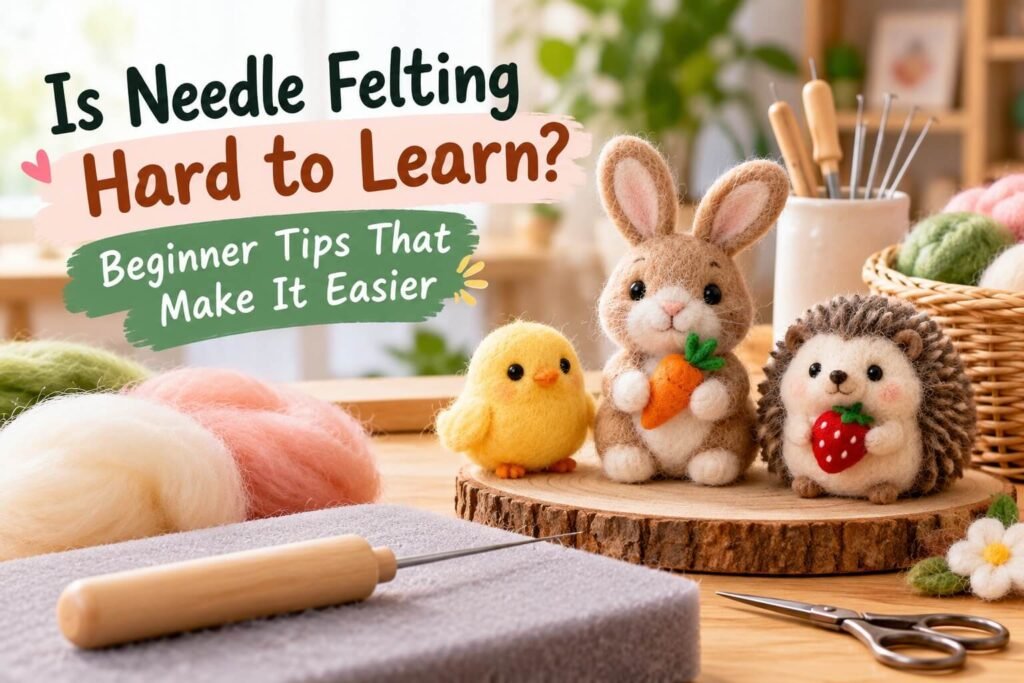
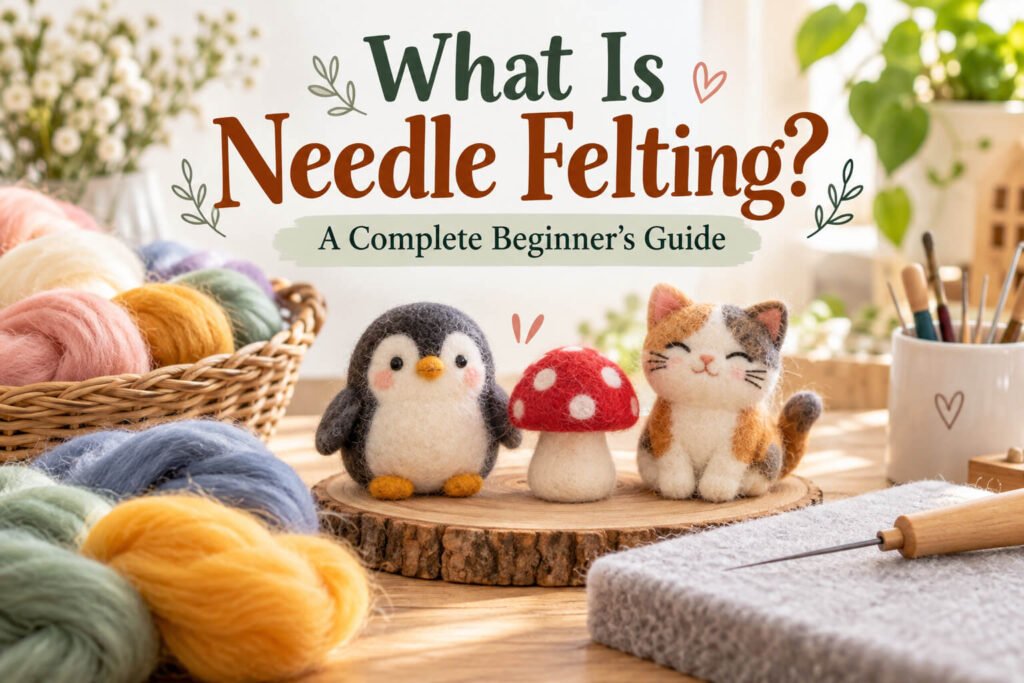
Needle felting can look intimidating when you see an artist create a realistic dog, cat, or wildlife sculpture.
However, advanced artwork combines many separate skills developed over time.
A complete beginner does not need to start there.
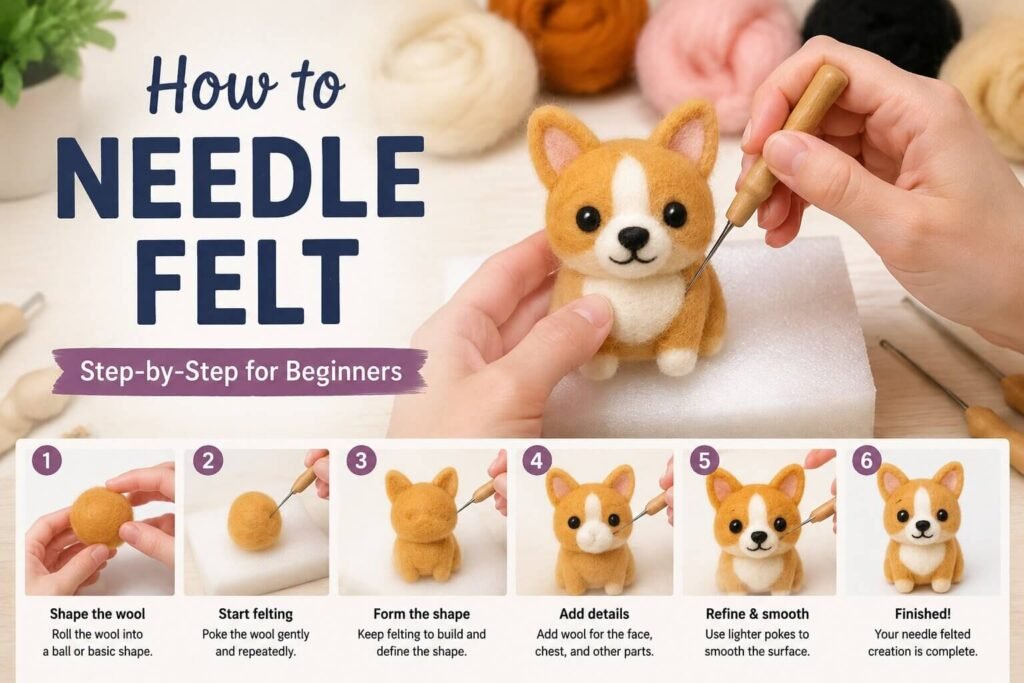
The fundamental technique is fairly simple: repeatedly work loose wool with a barbed felting needle until the fibers become compact enough to hold a shape.
If you have never used a felting needle before, our
complete beginner needle felting guide is the best place to start.
How Difficult Is Needle Felting?
Learning the basic movement is not particularly complicated.
The challenge is gaining control.
You need to learn how much wool to use, how firmly to felt, and where to concentrate your needle work to create a specific shape.
Those skills develop through repetition.
What Skills Do Beginners Need First?
Controlling Firmness
Many beginners stop felting too early.
The outside may look finished, but the interior remains loose.
Practice creating a basic ball and working it evenly until it maintains its shape.
Creating Basic Forms
Learn how to make a ball, oval, cylinder, cone, and flat shape.
Most animals can be broken into these simple forms.
Joining Pieces
Leave loose fiber at the point where a head, ear, tail, or leg will attach.
Use those fibers to connect the pieces.
Adding Surface Color
Practice covering a plain core with a thin layer of colored wool without losing the original shape.
Why Does Realistic Needle Felting Look So Difficult?
A realistic animal may require knowledge of anatomy, proportion, fur direction, color blending, eye placement, and facial structure.
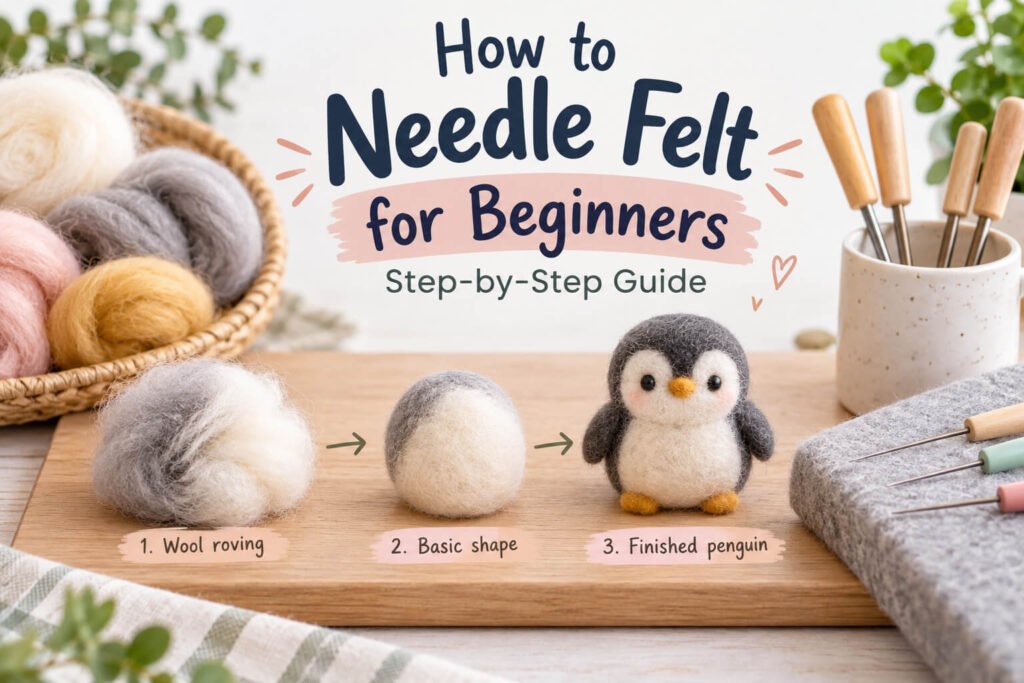
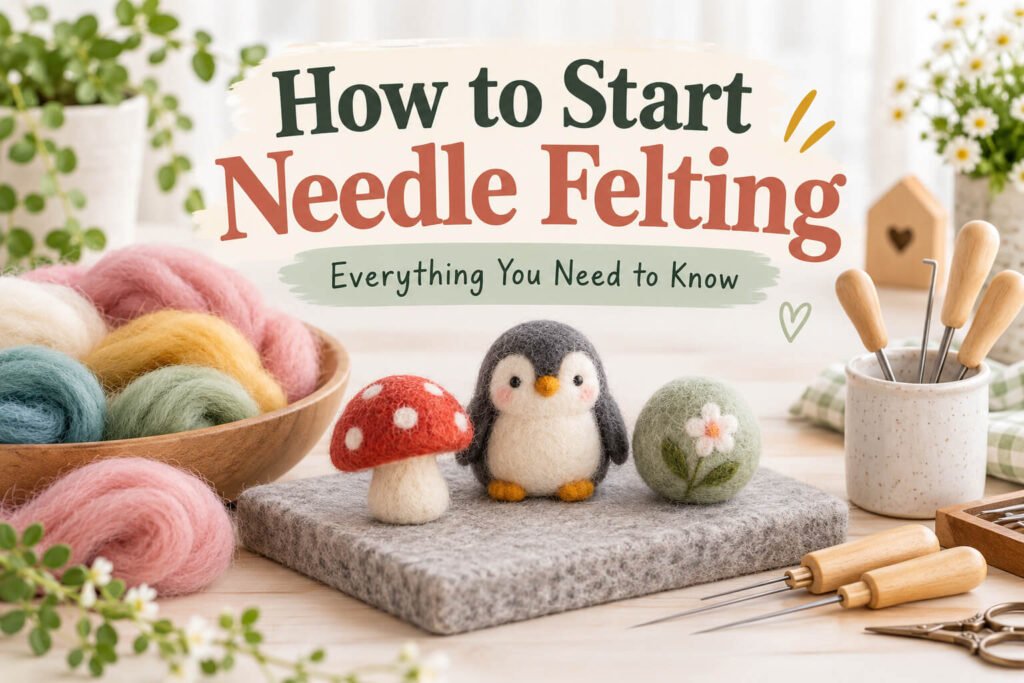
That is very different from making a beginner penguin.
Do not compare your first project with an artist’s hundredth project.
Is Needle Felting Easy at First?
The foundation is approachable.
Our article
is needle felting easy? explains which parts usually feel simple for beginners and which skills take longer to develop.
What Is the Hardest Part for New Felters?
Proportions are often challenging.
A cat might end up with an oversized head or ears that are too small.
A dog might have eyes placed too close together.
Reference photos make a major difference.
Check your work frequently from multiple angles.
Work More Slowly Than You Think You Need To
Rapid stabbing is not the goal.
Controlled needle work reduces the chance of broken needles and finger injuries.
It also gives you more accurate shaping.
Speed comes naturally later.
Make Matching Pieces Together
If you need two ears, work on them side by side.
Do the same for paws, wings, or legs.
This makes symmetry much easier.
Start With Small Amounts of Wool
You can always add material.
Dense excess wool is harder to remove.
This is especially important around the face.
A tiny piece of loose fiber can become a noticeable cheek or eyebrow after felting.
Check Your Project From Every Angle
A sculpture may look good from the front but flat from the side.
Regularly examine:
Front
Back
Left side
Right side
Top
This simple habit improves three-dimensional form.
Learn One New Skill at a Time
Your first project might teach basic shapes.
The next might teach ears and legs.
Another might introduce color blending.
Later, you can work on realistic eyes and fur.
This is much easier than trying to master everything in one project.
Do You Need a Class?
No.
Many people learn with kits, books, videos, tutorials, and practice.
Classes can still be valuable, especially when you want to learn a specialized technique.
Good Materials Make Learning Easier
Appropriate wool and needles can make a noticeable difference.
A needle that is too fine for early shaping can make the process feel painfully slow.
A suitable medium or coarse needle may help build the core faster before you switch to a finer finishing needle.
Does Needle Felting Require Patience?
Yes.
The craft involves repeated hand movements.
A realistic sculpture may involve thousands of needle strokes.
Many crafters enjoy this repetitive process because it feels focused and calming.
How Do You Know You Are Improving?
Compare your work over time.
Look for:
Better symmetry
Firmer construction
Cleaner attachment points
More accurate proportions
Smoother surfaces
More expressive faces
Small improvements matter.
Do Mistakes Make Needle Felting Harder?
They can.
Soft cores, oversized features, poor joins, or broken needles can make a beginner feel discouraged.
Most of these issues are predictable.
Read our guide to
common beginner needle felting mistakes to recognize them earlier.
Can You Teach Yourself at Home?
Yes.
If you prefer to learn independently, follow our
at-home needle felting learning plan.
It progresses from simple shapes to complete animals.
Needle Felting Becomes Easier With Practice
Needle felting is not hard to understand.
It simply rewards patience and repetition.
Choose an achievable project and focus on improving one skill at a time.
Browse beginner kits, wool, needles, and tools from
FeltMyPet and give yourself a strong foundation for your first projects.