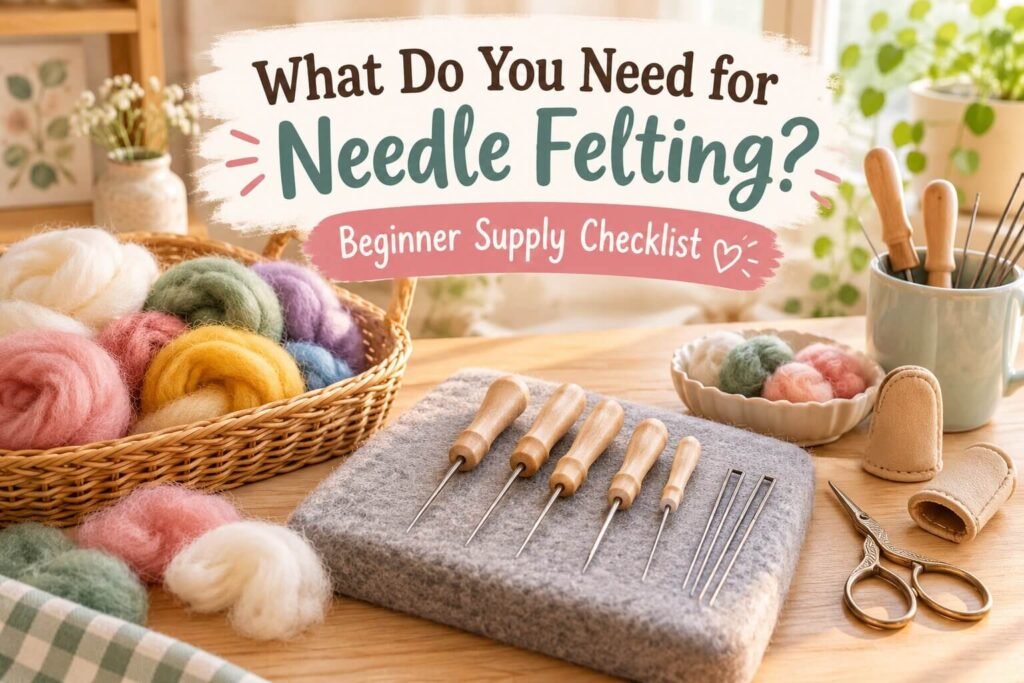
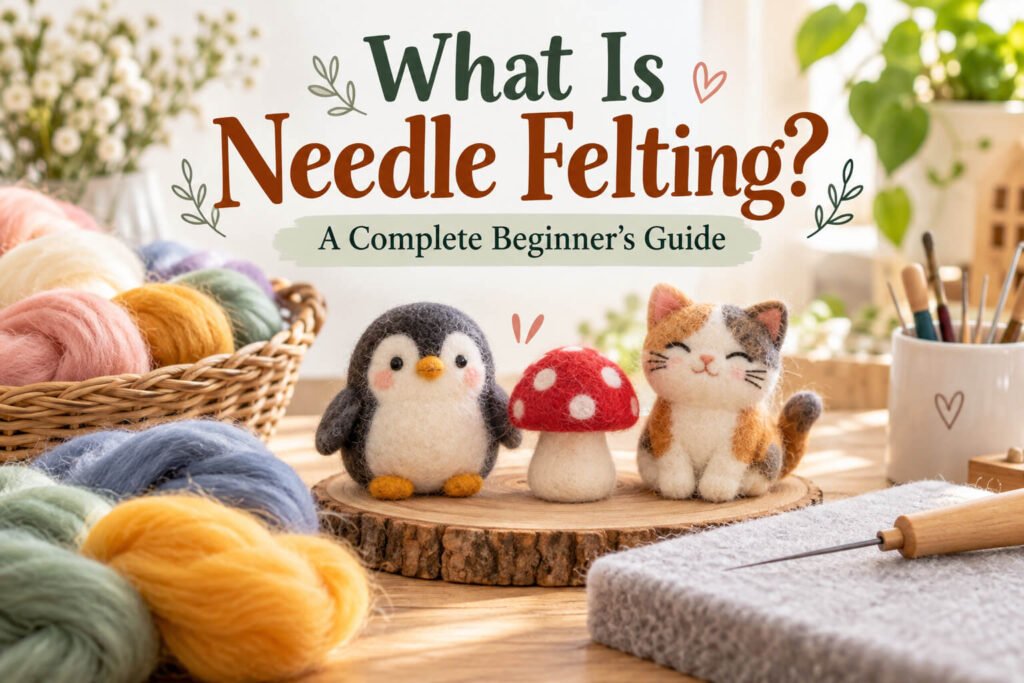
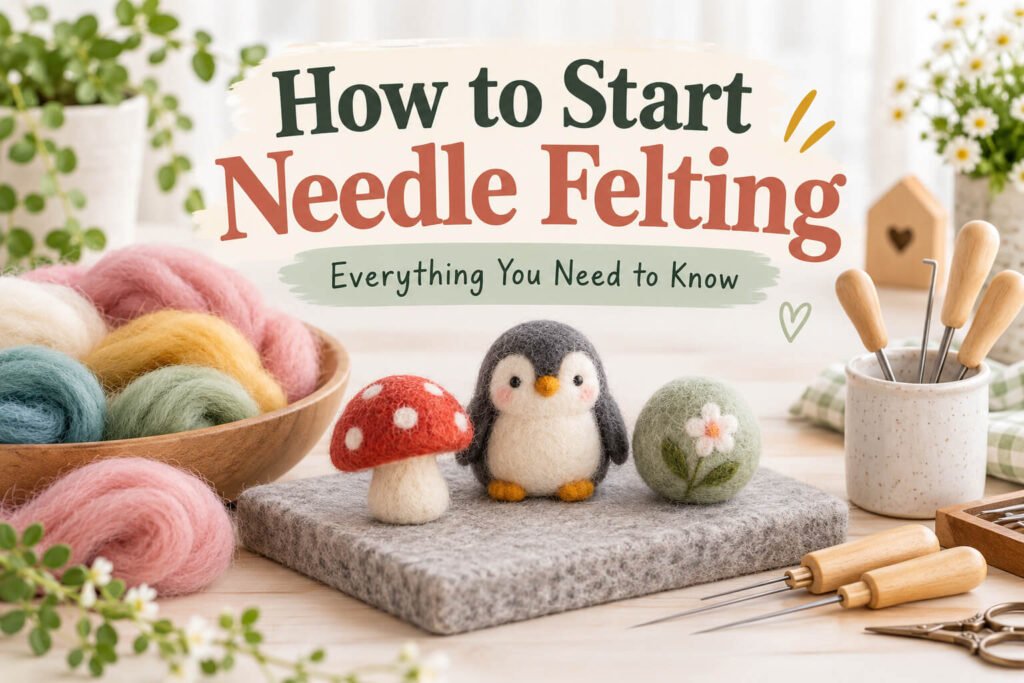
One of the first questions new crafters ask is: what do I need for needle felting?
A quick search can make the hobby look more complicated than it really is because there are dozens of needles, wool varieties, mats, holders, eyes, wires, molds, and accessories available.
Beginners do not need everything.
A few reliable essentials are enough.
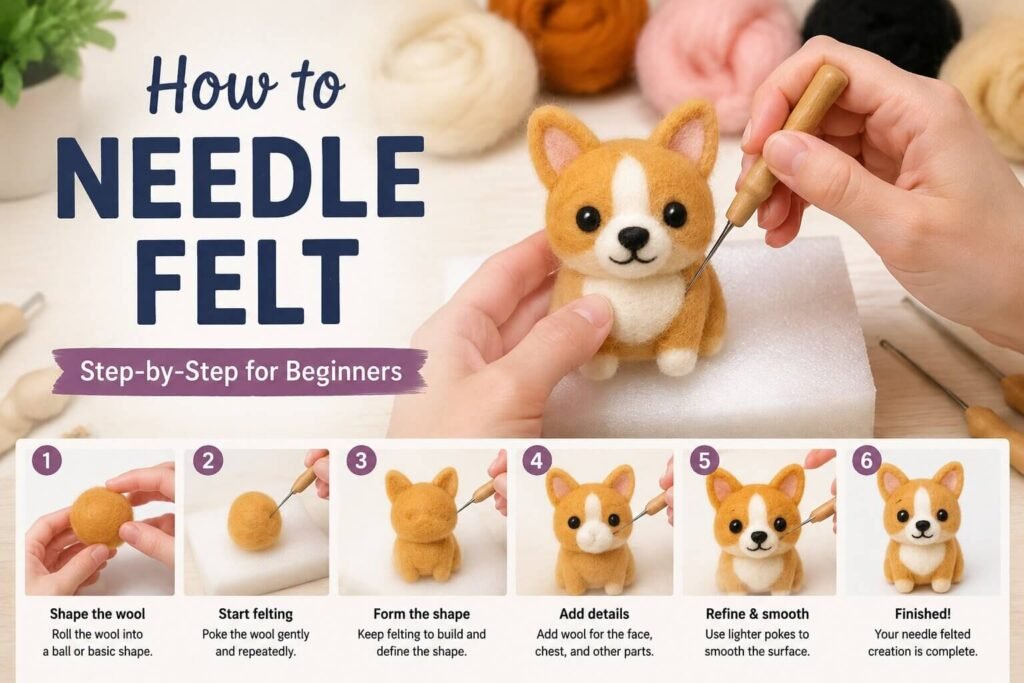
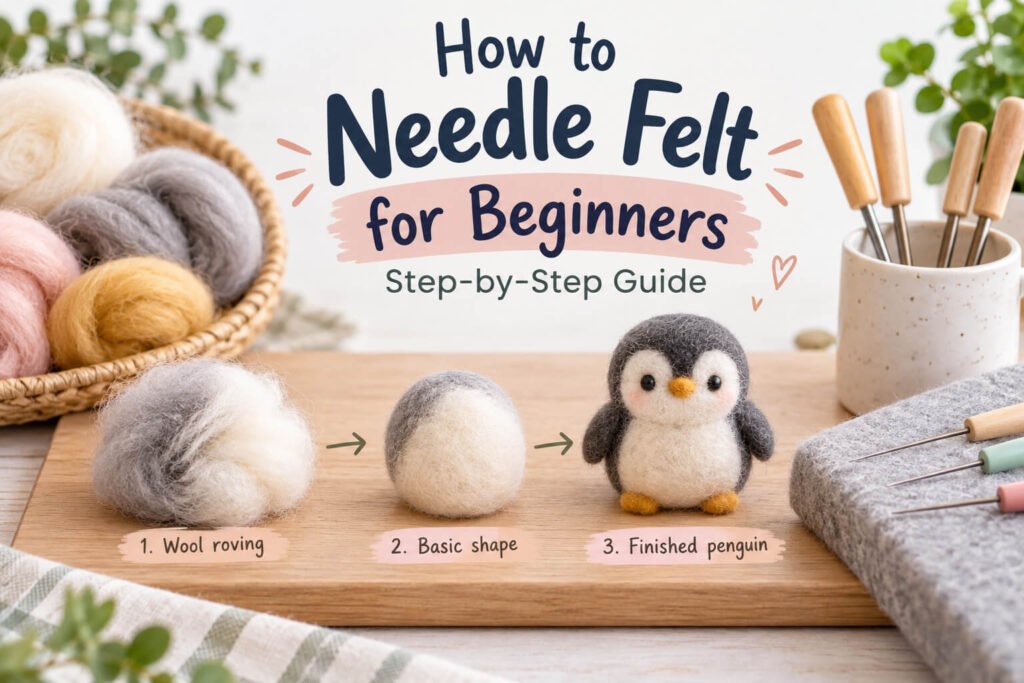
Once you have your supplies, follow our
step-by-step beginner needle felting tutorial to learn how to use them.
The Three Essential Needle Felting Supplies
You can begin with three basic items:
Wool
Felting needles
Felting mat
Everything else can be added as your projects become more advanced.
Needle Felting Wool
Wool is the material that becomes your sculpture.
Different projects may use different fiber preparations, but beginners do not need an enormous selection.
Core Wool
Core wool is useful for the hidden inside of larger sculptures.
You can use it to build:
Bodies
Heads
Large rounded shapes
Basic volume
Since it will be covered, the exact color often does not matter.
Colored Surface Wool
Colored wool creates the visible outer layer.
For animal projects, useful starter colors include white, cream, tan, brown, gray, black, and pink.
You can add brighter colors for fantasy animals and decorations.
Felting Needles
A felting needle is not an ordinary sewing needle.
The barbs are essential to the felting process.
A small variety is useful because different needles perform different jobs.
Coarser Needles
These are useful for quickly compacting loose wool and establishing basic forms.
Medium Needles
These are practical general-purpose tools for shaping.
Fine Needles
These are useful for smaller details and surface finishing.
You do not need dozens of needles.
A small assortment is enough for many beginner projects.
Felting Mat
A felting mat protects your work surface.
It also protects the needle when it passes through the wool.
Common options include foam pads, wool mats, and brush-style surfaces.
Choose something thick enough for your project.
Finger Guards
Finger guards are optional but can be helpful while you are learning.
Felting needles are very sharp.
Leather or similar protective guards provide an additional layer between your fingers and the needle.
They do not replace safe technique.
Needle Holders
Some crafters hold a single bare needle directly.
Others prefer a handle.
A multi-needle holder can also make it faster to work over larger surfaces, although a single needle offers better control for small details.
Small Scissors
A sharp pair of small scissors can be useful for trimming stray fibers.
However, scissors should not replace proper felting technique.
Most shaping should happen through the needle.
Eyes for Needle Felted Animals
Animal makers may use glass eyes, plastic eyes, or eyes made entirely from wool.
Felted wool eyes are a good beginner option because they do not require additional components.
Armature Wire
Wire can provide internal support for long limbs, tails, larger figures, or poseable animals.
However, it is not necessary for a simple rounded beginner project.
Do not add complexity before you need it.
Pliers and Wire Cutters
If you eventually make wire armatures, add suitable cutters and needle-nose pliers.
Avoid damaging craft scissors by cutting strong wire with them.
Storage Containers
Wool expands and can quickly fill a craft space.
Use clear bags, boxes, or compartments to organize colors.
Store sharp needles separately and securely.
Reference Photos
For animal makers, reference photos are one of the most useful tools.
Study:
Front view
Side view
Fur markings
Eye color
Ear position
Body proportions
This becomes especially important when you begin making realistic pets.
How Much Wool Should You Buy?
The answer depends on the project.
A small ornament needs much less than a large animal.
A dense sculpture requires more fiber than a soft decorative piece.
Our guide to
how much wool you need for needle felting explains the main factors.
Do You Need Expensive Supplies?
No.
Spend your money first on useful essentials.
Reliable needles, suitable wool, and a safe work surface matter more than having every specialty tool.
If budget is a concern, read
is needle felting expensive? for tips on starting without overspending.
Should Beginners Buy a Kit?
A kit can simplify your first project.
It may contain the correct colors, enough fiber, a pattern, instructions, and accessories.
Check whether tools are included.
Not every kit contains needles or a mat.
Supplies for Realistic Animals
Later, you may want to add:
More wool shades
Reverse needle
Fine finishing needles
Glass eyes
Armature wire
Whisker materials
Detail tools
Buy these only when a project requires them.
A Practical Beginner Setup
Your first purchase could simply include core wool, several surface colors, a small variety of needles, a felting mat, finger guards, and one easy project.
Then start using what you already own.
Our collection of
easy needle felting projects can help you put your new supplies to work.
Build Your Collection Gradually
The best craft collection is one built around projects you genuinely enjoy.
Do not buy every tool just because an advanced artist owns it.
Explore wool, beginner kits, needles, and animal-project supplies at
FeltMyPet and build your setup one useful item at a time.