How much wool do you need for needle felting?
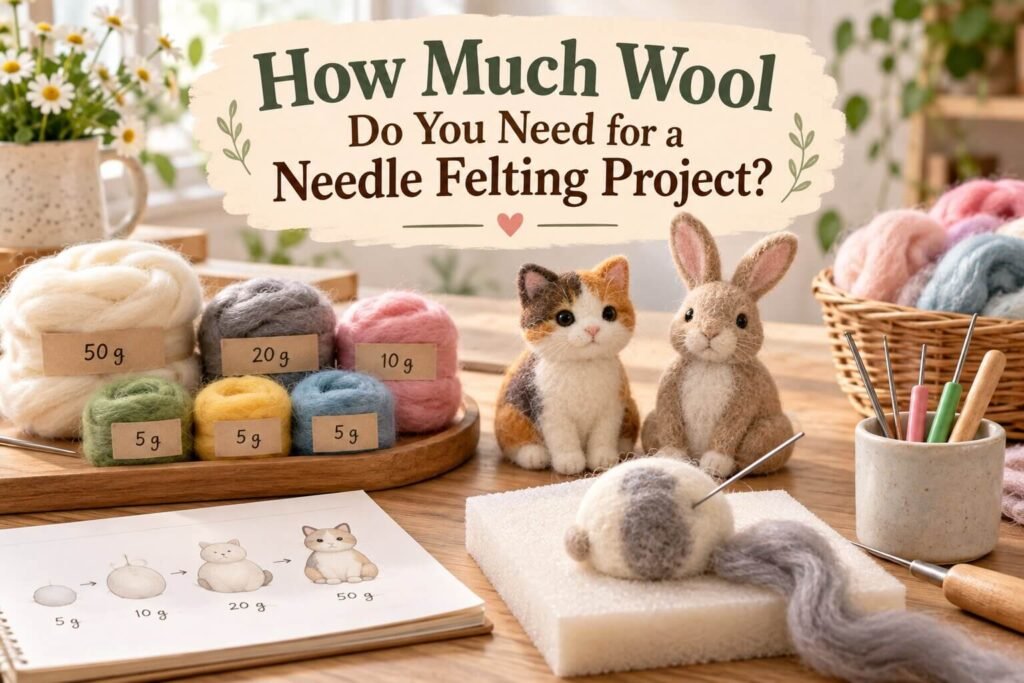
This is one of the hardest questions for beginners because there is no universal amount that works for every project.
A tiny bird and a large realistic dog can both be needle felted, but their material requirements are completely different.
If you are new to the craft, our
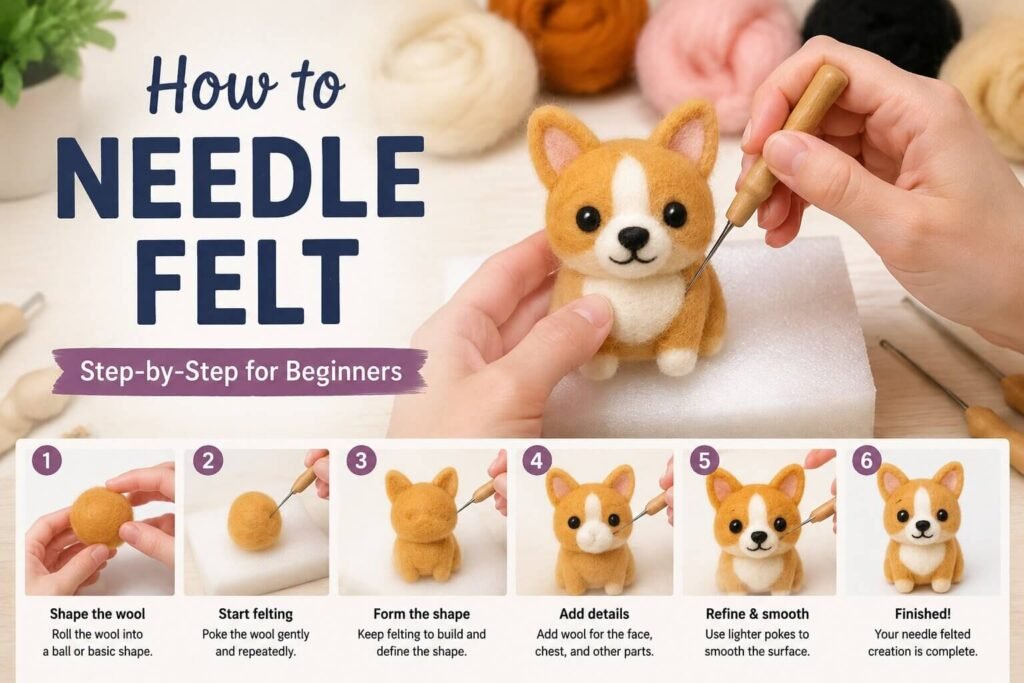
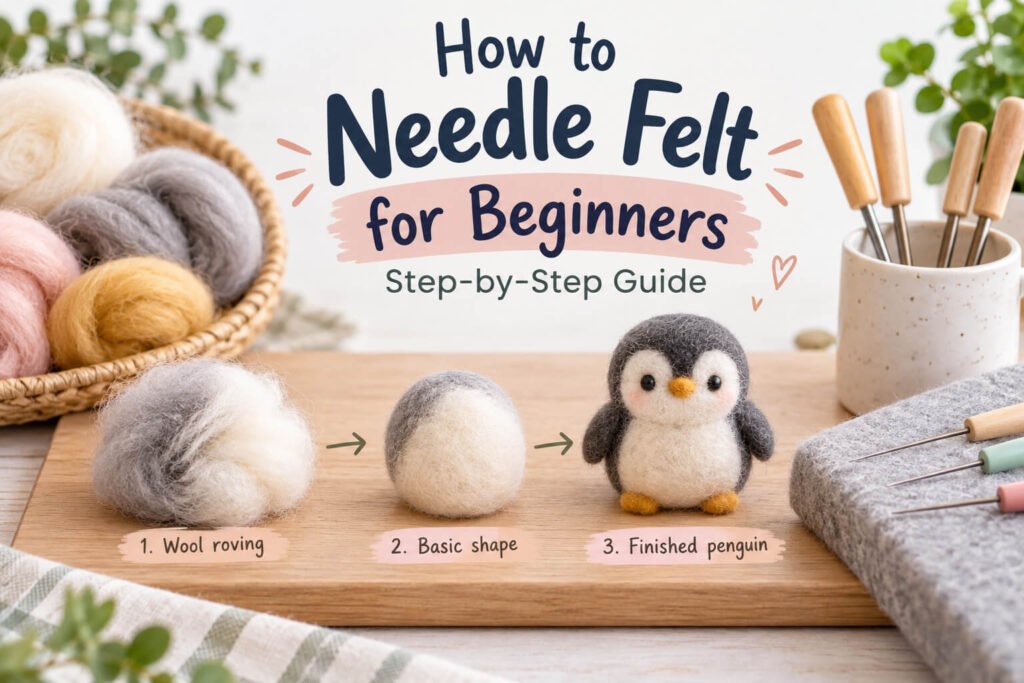
beginner needle felting tutorial will help you understand how wool compresses during the process.
Why Does the Amount of Wool Vary?
Several factors affect usage.
These include project size, firmness, wool type, internal construction, number of colors, armature, and surface texture.
A dense sculpture generally needs more fiber than a loosely felted decorative object of a similar size.
Loose Wool Looks Larger Than It Really Is
Raw or prepared wool contains a lot of air.
As you felt it, the fibers become compact.
This means a fluffy bundle that appears large may become a much smaller finished form.
Beginners often underestimate how much shrinkage occurs.
What Is Core Wool?
Core wool is often used for the interior of a three-dimensional sculpture.
It creates the main volume.
Once the core is firm, you can cover it with your final surface colors.
This is especially useful for animals.
You do not need to build an entire fox from orange surface wool or an entire cat from premium gray fiber.
How Much Colored Wool Do You Need?
Usually less than you need for the core.
Surface wool can be applied in relatively thin layers.
The goal is to cover the underlying form and create the final color or texture.
How Do You Estimate Wool for an Animal?
First decide the finished size.
Then consider the body, head, limbs, and tail.
Think about whether the sculpture will be dense or relatively soft.
Finally, consider whether wire or another internal support changes the amount of fiber needed.
Does Long Fur Use More Wool?
Usually.
A smooth short-haired animal can be covered with a relatively thin surface layer.
A long-haired animal may require additional fibers because some wool remains loose to create the appearance of fur.
Do Multicolored Animals Require More Wool?
Not necessarily much more in total, but you may need more color variety.
A tabby cat, for example, may use several grays, black, cream, white, and pink.
You might only need a small amount of each color.
How Can You Avoid Running Out?
Buy a small margin above your estimate.
This is particularly useful when color matching matters.
Save your best surface wool until the core shape is finished.
Test color blends in small quantities before mixing a large amount.
How Can You Avoid Buying Too Much?
Buy project by project.
If you plan to make a fox, purchase the shades required for the fox.
When you move on to a bunny, add only the new colors you need.
Your wool collection will grow naturally.
Can You Reuse Leftover Wool?
Absolutely.
Small scraps are useful.
They can become eyes, noses, inner ears, spots, paw pads, flowers, buttons, or other tiny details.
Even very small pieces can be worth saving.
Should You Measure Wool by Volume?
Weight is more useful because loose volume can be misleading.
Different fibers can look completely different in the bag.
One preparation may appear very fluffy, while another is compact.
Should You Weigh Wool Before Felting?
You can.
This is especially helpful when making matching pieces or repeated ornaments.
If you want two items to be similar in size, weighing the starting fiber can improve consistency.
For casual one-off projects, exact measurement is not always necessary.
What Supplies Do You Need Besides Wool?
Do not forget that wool is only part of the setup.
You also need suitable needles and a safe mat.
Our guide to
essential needle felting supplies explains the complete beginner setup.
How Does Wool Affect Your Budget?
Buying only what you need can keep costs under control.
For more practical budgeting advice, see
is needle felting expensive?
What If You Run Out Mid-Project?
Do not panic.
You may be able to order more, blend a similar color, or intentionally adjust the design.
Realistic pet portraits require closer color matching than a fantasy or cartoon-style project.
Planning Wool for Realistic Pets
A pet that appears to be one color may actually contain many subtle shades.
A brown dog could contain chocolate, warm brown, tan, cream, black, and gray highlights.
Study photographs carefully before choosing your palette.
Keep a Simple Wool Inventory
As your collection grows, record the colors and fiber types you own.
This prevents unnecessary duplicate purchases.
Start With a Small Project
If estimating wool feels difficult, begin with one of our
easy beginner needle felting projects.
A small project makes material planning much easier.
Buy for the Project You Are Making Now
There is no perfect universal amount of wool for needle felting.
Project size, firmness, fiber, and technique determine usage.
Explore wool, beginner kits, and project supplies from
FeltMyPet and build your fiber collection around the things you actually want to create.